

What the declarations page actually is
Every homeowners insurance policy comes with a declarations page, often called the "dec page." It is a one- or two-page summary that sits at the front of your policy packet and condenses the most important details of your coverage into a readable format. It does not replace the full policy document, which contains the exclusions, conditions, and definitions that ultimately govern what your insurer will pay.
Think of the dec page as a snapshot. It tells you who is insured, what property is covered, what coverage amounts apply, and what the policy costs. When you need to file a claim, confirm your coverage with a lender, or compare what you have against another policy, this is the page you reach for first.
| Common name | Dec page or declarations page |
| Location in your policy | First page or first two pages of the policy packet |
| Standard dwelling coverage label | Coverage A |
| Personal property coverage label | Coverage C |
| Personal liability coverage label | Coverage E |
| Perils typically not shown | Flood and earthquake (usually excluded; verify in full policy) |
Reading each section of the page
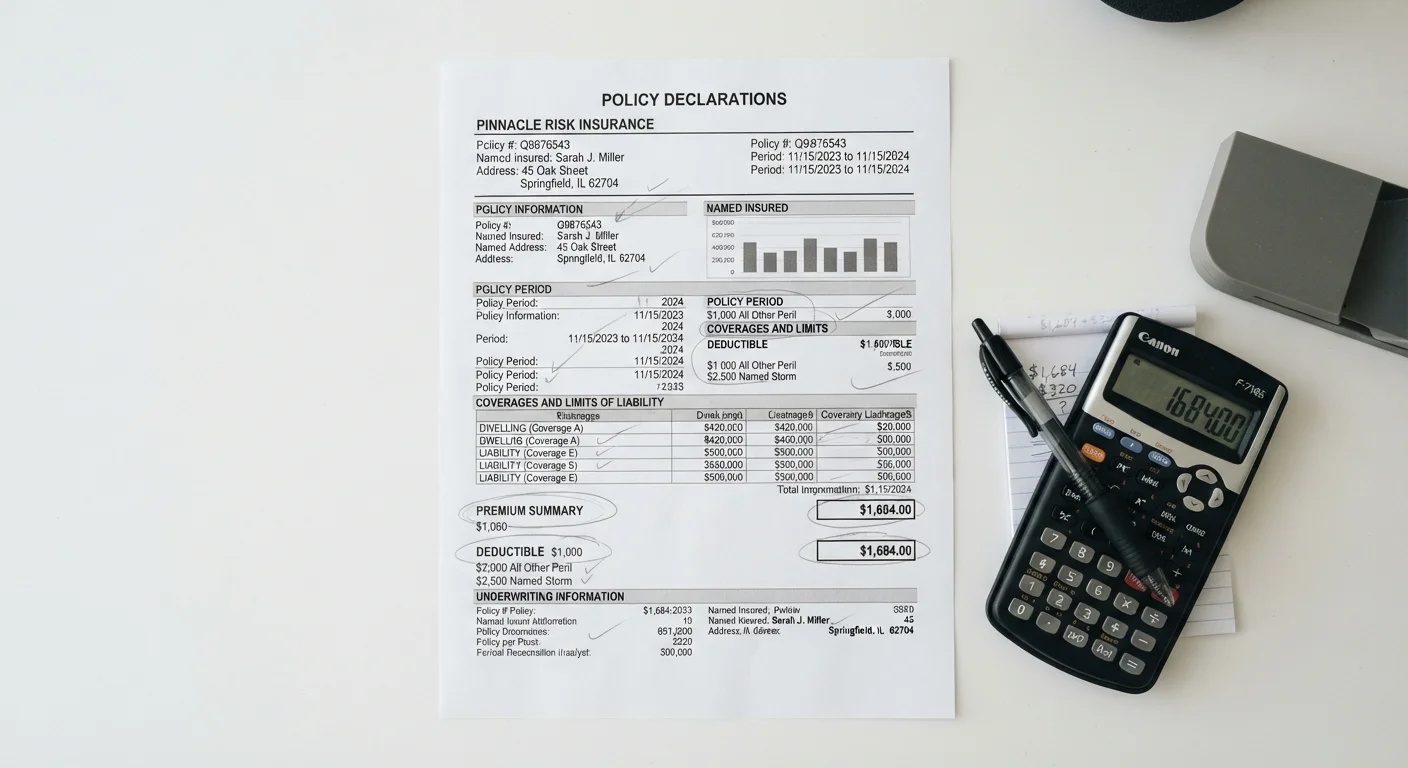
Named insured and property address. The top of the page lists the policyholder's name and the address of the insured property. If you have a mortgage, your lender is typically listed as an "additional interest" or "mortgagee," which means the insurer will notify them of cancellations or changes.
Policy period. This is the effective date and expiration date of your coverage. Coverage does not automatically continue after expiration; your insurer must renew or you must replace the policy.
Coverage types and limits. Most dec pages organize coverage into labeled sections. Coverage A (dwelling) is the amount the insurer will pay to rebuild the structure of your home. Coverage B (other structures) covers detached garages, fences, and similar structures, often set at 10 percent of Coverage A. Coverage C (personal property) applies to your belongings. Coverage D (loss of use) pays for temporary living expenses if your home becomes uninhabitable after a covered loss.
Liability and medical payments. Coverage E is personal liability, which protects you if someone is injured on your property and sues. Coverage F covers limited medical payments to guests, regardless of fault.
Deductible. This is the amount you pay out of pocket before the insurer pays on a claim. Some policies carry a separate, higher deductible for specific perils such as wind or hail, listed as a percentage of Coverage A rather than a flat dollar amount.
Premium. The annual cost of the policy, sometimes broken into installments. This figure reflects your base rate plus any endorsements or credits applied.
Endorsements. Any additions or changes to the standard policy appear here by name. Scheduled personal property, water backup coverage, or an inflation guard endorsement would all be listed. The dec page names them; the full policy explains what each one does.
Understanding these sections on a homeowners policy follows similar logic to reading other insurance documents. For comparison, see how health insurance terms work or what auto coverage types actually do.
Common gaps the dec page will not show you
The dec page tells you your Coverage A limit, but it does not tell you whether that number is enough to actually rebuild your home at current construction costs. Rebuilding costs can differ from market value, and underinsurance is a common problem policyholders discover only after a loss.
Flood and earthquake coverage are almost never included in a standard homeowners policy. If neither appears as an endorsement on your dec page, assume those perils are excluded. Verify by checking the exclusions section of the full policy.
Personal property limits under Coverage C apply to total belongings, but many policies set sub-limits on specific categories such as jewelry, art, or electronics. If you own high-value items, check the dec page for any scheduled property endorsements or contact your insurer to ask about sub-limits.
Home warranties cover different territory entirely. A warranty addresses mechanical breakdown of systems and appliances rather than sudden damage from a covered peril. If you are sorting out what each type of protection covers, what home warranty coverage actually includes explains where the two products diverge.
This article is for general informational purposes only and is not personalized insurance advice. Coverage terms, exclusions, and limits vary by provider and by state. Read your actual policy documents and consult a licensed insurance agent for guidance specific to your situation.