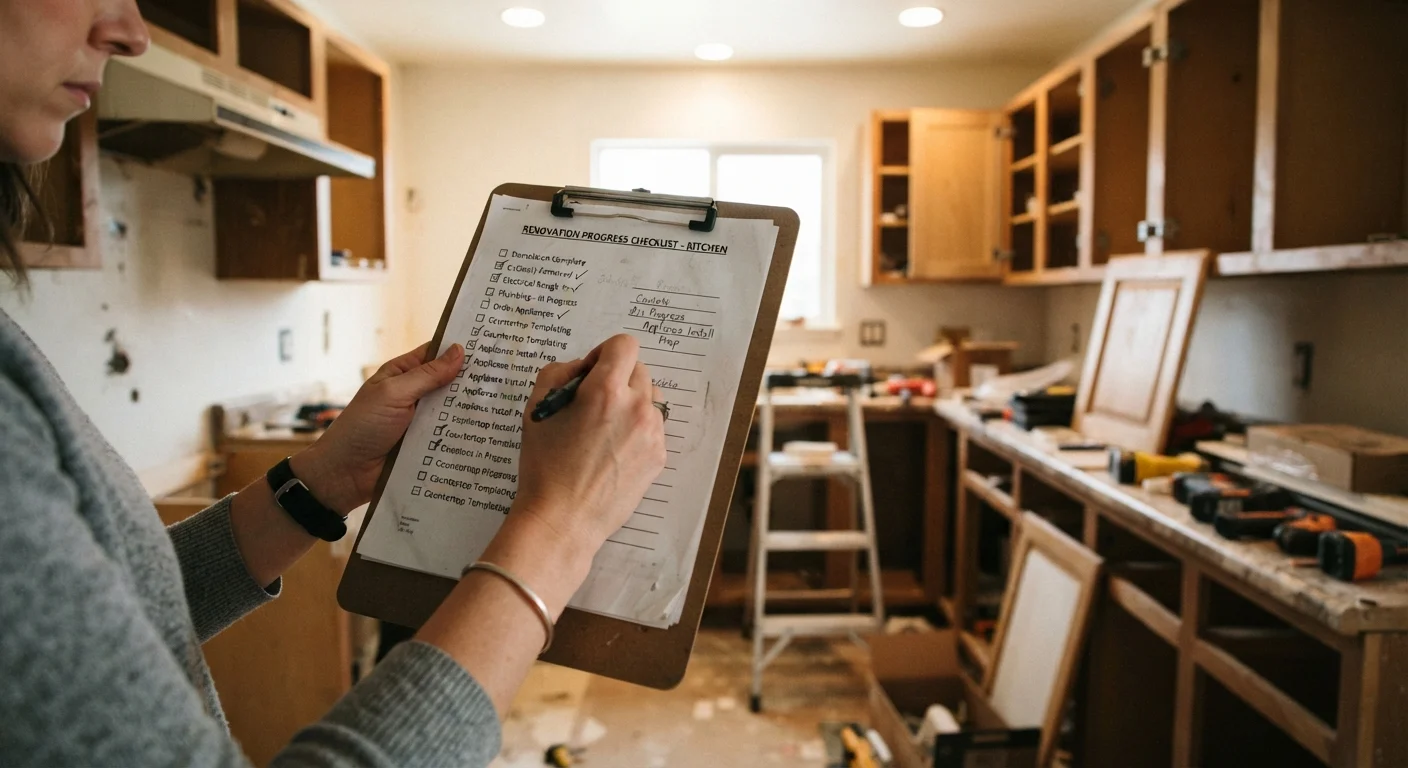
Getting your home ready before a contractor arrives saves time, prevents miscommunication, and helps the job go smoothly. Use this checklist to prepare.
Key Takeaways
Clear a written scope of work with your contractor before any materials are ordered or work begins.
Protecting adjacent rooms from dust and debris is the homeowner's responsibility unless specified in the contract.
Photograph existing conditions in every work area before the contractor arrives.
Confirm permit requirements with your local building department, not just your contractor.
Secure valuables and fragile items well before the scheduled start date, not the morning of.
Why preparation matters before work starts
A contractor's time on-site costs money whether the crew is working or waiting for you to move furniture. Preparation done ahead of the start date keeps the schedule intact, reduces the chance of accidental damage to belongings, and gives you a clear baseline if something goes wrong later.
This checklist is organized by area of the home. Work through the sections that apply to your project. If your job spans multiple rooms or affects shared systems such as plumbing or electrical, the general preparation steps apply to all of them. For broader ongoing maintenance context, see the first-time homeowner's routine maintenance guide.
A written checklist helps you track preparation steps and gives you a record to reference during the job.
Before the contractor arrives: whole-home steps
These steps apply regardless of which room is being worked on.
Documentation and contracts
Confirm you have a signed written contract that specifies scope, materials, timeline, payment schedule, and warranty terms before any work begins.Must
Request proof of current liability insurance and any required workers' compensation coverage, and keep copies.Must
Verify which party is responsible for pulling permits, and check directly with your local building department to confirm what the project requires.Must
Photograph every surface, wall, floor, and fixture in the work area with timestamps before the first tool arrives.Must
Access and utilities
Identify and label the circuit breakers and shutoff valves that serve the work area so both you and the contractor know where they are.Must
Confirm with the contractor how they will enter the home each day and whether you need to be present at the start.Should
Arrange a secure, designated parking area for the crew and a clear path from entry to the work area.Should
Protecting the home
Move furniture, rugs, and wall decor out of the work area completely rather than to the edges of the room.Must
Cover HVAC vents in adjacent rooms with plastic sheeting to limit dust migration.Should
Lay floor protection (rosin paper, cardboard, or contractor's paper) along the full path from the entry door to the work area.Should
Remove or relocate any item along the access path that could be knocked over or damaged by equipment or materials being carried through.Should
Kitchen preparation
Empty cabinets, drawers, and countertops in the work zone and move contents to a temporary storage area in another room.Must
If the refrigerator or range must be moved, disconnect or arrange disconnection of water lines or gas connections by a licensed professional before the start date.Must
Set up a temporary food and coffee station in another room so the kitchen can be fully out of service without disrupting daily routines.Nice to have
Bathroom preparation
Remove all personal items from medicine cabinets, vanity surfaces, and shower shelves before work begins.Must
Confirm with your contractor which bathroom will remain usable during the project and communicate that to all household members.Must
If the project involves tile, confirm disposal of old materials is included in the contract or arrange your own haul-away.Should
Final checks before day one
Secure pets in a room away from the work area or arrange for them to be elsewhere during work hours.Must
Remove or lock away cash, jewelry, prescription medications, and other valuables the day before work starts.Must
Confirm the project start time, daily work hours, and a direct contact number for the crew lead or project manager.Should
Written scope protects both parties
Verbal agreements about what is included are difficult to enforce if a dispute arises. Before the project starts, make sure the written contract explicitly lists materials by type and grade, a payment schedule tied to milestones rather than calendar dates, and a process for handling changes to the original scope. Any agreed change to the scope during the project should be documented in a written change order signed by both parties.
Room-by-room preparation
Once the whole-home steps are done, move through each affected room using the area-specific items below. Kitchens and bathrooms typically need the most lead time because appliances, plumbing access points, and food storage all require advance planning. Bedrooms and living areas are usually faster to prep but still need furniture cleared and floors protected.
Permits pulled after work starts create problems
Work done without the required permits can complicate a future home sale, void homeowner's insurance claims related to that work, or require costly tear-out for inspection. Do not assume your contractor has verified local requirements. Contact your local building or permits department directly before the project start date to confirm what is needed for your specific job.
Home & Lifestyle Editorial Team is the collective byline for our editorial team and contributor network. Articles published under this byline or an editorial pen name are researched, written, and reviewed according to our editorial standards for clarity, consistency, and independence before publication.
The content provided on our blog site traverses numerous categories, offering readers valuable and practical information. Readers can use the editorial team’s research and data to gain more insights into their topics of interest. However, they are requested not to treat the articles as conclusive. The website team cannot be held responsible for differences in data or inaccuracies found across other platforms. Please also note that the site might also miss out on various schemes and offers available that the readers may find more beneficial than the ones we cover.