

The baseline: mowing, edging, and cleanup
The foundation of nearly every lawn care plan is the mowing visit. A technician mows the grass to a specified height, edges along hard surfaces such as driveways, sidewalks, and curbs, and blows clippings off patios and walkways. Some providers also include string trimming around trees, fences, and other obstacles as part of this visit; others charge extra for it.
Mowing height matters more than many homeowners realize. Cutting grass too short stresses the turf and invites weeds. A reputable provider will adjust cutting height by season and grass type rather than applying one fixed setting year-round. Ask how the provider handles this before signing.
Clipping removal is another variable. Most standard plans leave clippings on the lawn, which returns nutrients to the soil. Bagging and hauling clippings away usually costs more. If you prefer bagged clippings, confirm whether that is included or a separate charge.
Fertilization and weed control: included or add-on?
This is where service plans diverge most sharply. Some providers advertise a "complete" plan that bundles fertilization and broadleaf weed control into a single annual price. Others sell mowing as one program and a separate treatment program alongside it.
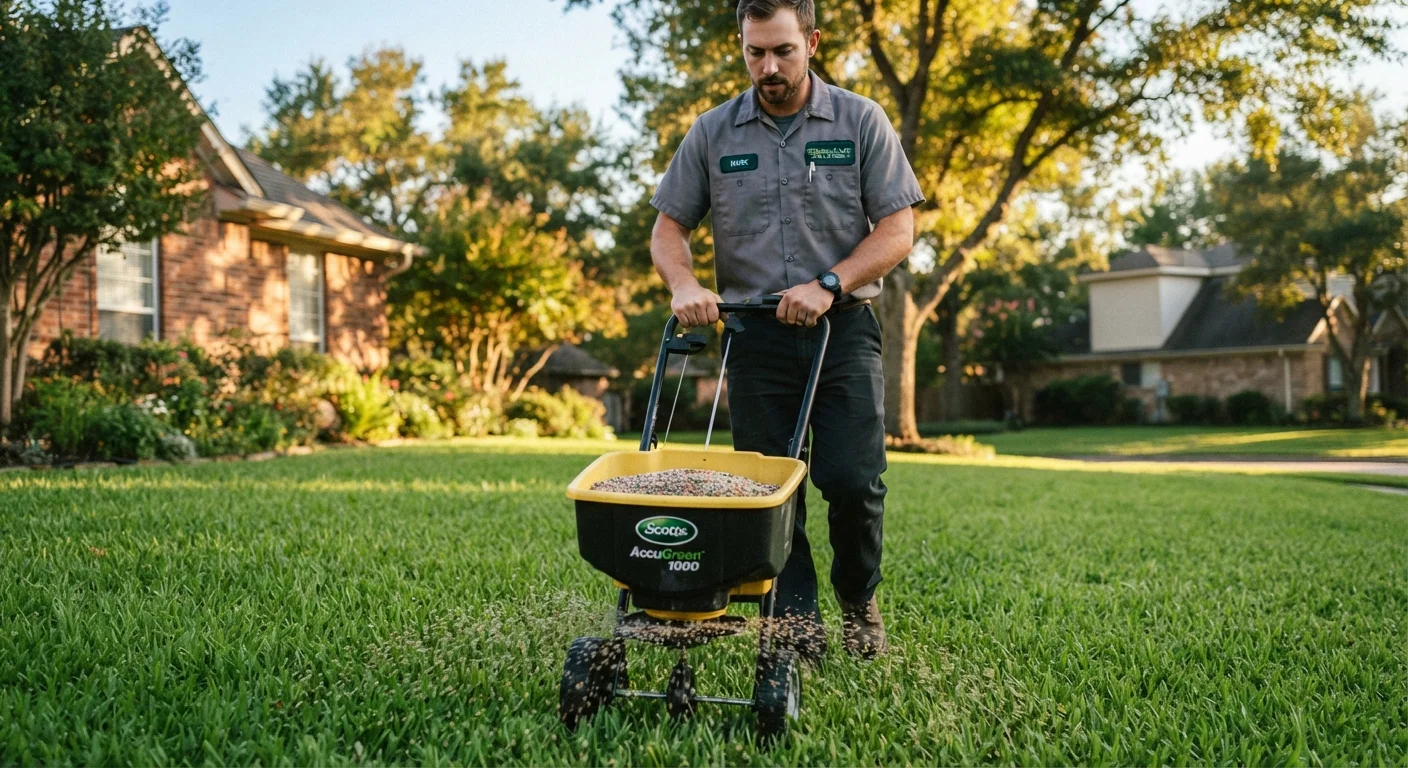
A full fertilization program typically involves four to six applications per year timed to the growing season. Each application may include different nutrient ratios suited to early growth, summer heat, or fall preparation. Weed control products, if included, are applied as either pre-emergent treatments (applied before weeds germinate) or post-emergent treatments (applied to visible weeds).
Before comparing prices, clarify exactly how many treatment visits are included in a year, which products are used, and whether the provider is licensed to apply herbicides and fertilizers in your state. Most states require applicators to hold a pesticide applicator license for commercial lawn treatments.
Ask for a written service list, not just a package name
Package names like 'basic,' 'standard,' or 'premium' mean different things at different companies. Request an itemized list of exactly what happens at each visit and how many visits per year are included. This makes it straightforward to compare quotes side by side.
Services that are almost always separate
Several tasks that homeowners associate with lawn care are rarely part of a standard plan. Tree and shrub trimming, for example, is a different skill set and is typically quoted independently. The same applies to mulching, edging garden beds, pest control (grubs, chinch bugs, or surface insects), and irrigation system startup or winterization.
Aeration and overseeding, which help compacted lawns recover and improve turf density, are seasonal services that most providers schedule as one-time or annual add-ons. Lawn renovation work such as seeding bare patches or installing new sod falls well outside the scope of a maintenance plan.
If any of these services matter to you, get a written quote for each one. Bundling them into a single annual agreement can simplify billing, but only if the price and service frequency are spelled out clearly. The same careful review process that applies to any service contract applies here. For a useful parallel from another service category, see what home warranty coverage actually includes, which walks through how to read exclusions and limitations in a service agreement.
How regional climate affects what a plan should cover
Lawn care needs in a humid Southern state differ from those in the arid Southwest or the colder Northeast. Warm-season grasses such as Bermuda and Zoysia follow a different growth cycle than cool-season grasses like fescue or Kentucky bluegrass, so fertilization timing, mowing schedules, and treatment windows all shift accordingly.
In areas with hard winters, lawn care service may pause entirely for several months. In year-round warm climates, some level of service continues through all twelve months. A plan priced for 30 visits per year means something different in Phoenix than in Minneapolis.
Ask any provider how they structure service for your specific grass type and local climate. A provider who gives a generic answer without referencing your turf type is worth questioning further. For a broader look at seasonal home maintenance that intersects with lawn care, seasonal home maintenance tasks most homeowners overlook covers items that often get skipped until they become costly.
What to review before signing a service agreement
Service agreement language varies as much as the services themselves. Before committing to any plan, check for these specifics: the exact list of services included at each visit, the number of visits per year (or per season), how the provider handles skipped visits due to weather or scheduling conflicts, and whether the price can change mid-contract.
Cancellation terms deserve attention. Some providers charge a fee for ending a contract early; others allow cancellation with 30 days' notice. If a contract locks you in for a full year, know what the exit costs are before you sign.
Finally, confirm the provider's licensing and insurance status. A legitimate lawn care company carries liability insurance to cover damage to your property and workers' compensation for its employees. Asking for proof of both is a reasonable step, not an unusual request.