

Why routine maintenance matters
Owning a home means taking on responsibility for systems and structures that gradually wear down over time. A furnace, roof, water heater, and plumbing system all have finite lifespans, and ignoring small warning signs consistently leads to larger, more expensive failures. The connection between regular upkeep and long-term cost control is straightforward: a $20 filter replacement prevents debris buildup that can shorten the life of an HVAC unit costing several thousand dollars to replace.
Beyond cost, maintenance protects the safety of everyone in the home. Non-functioning smoke detectors, clogged dryer vents, and deteriorating caulk around windows are not cosmetic issues; each carries a real risk of fire, water damage, or energy loss. First-time homeowners who build a consistent schedule in the first year tend to find the process manageable, because small tasks spread across the calendar are far less disruptive than emergency repairs.
Preventive maintenance
Scheduled upkeep done before a problem appears, with the goal of extending equipment life and avoiding larger repairs.
HVAC system
The heating, ventilation, and air conditioning equipment that controls temperature and air quality in your home.
Home warranty
A service contract that may pay for repair or replacement of specific appliances or home systems when they break down from normal use. It is separate from homeowners insurance.
Caulking
A flexible sealant applied around windows, doors, and joints to block air and water from entering the home.
Shut-off valve
A valve that stops the flow of water or gas to a specific fixture or area of the home, used in emergencies or during repairs.
Monthly tasks every homeowner should do
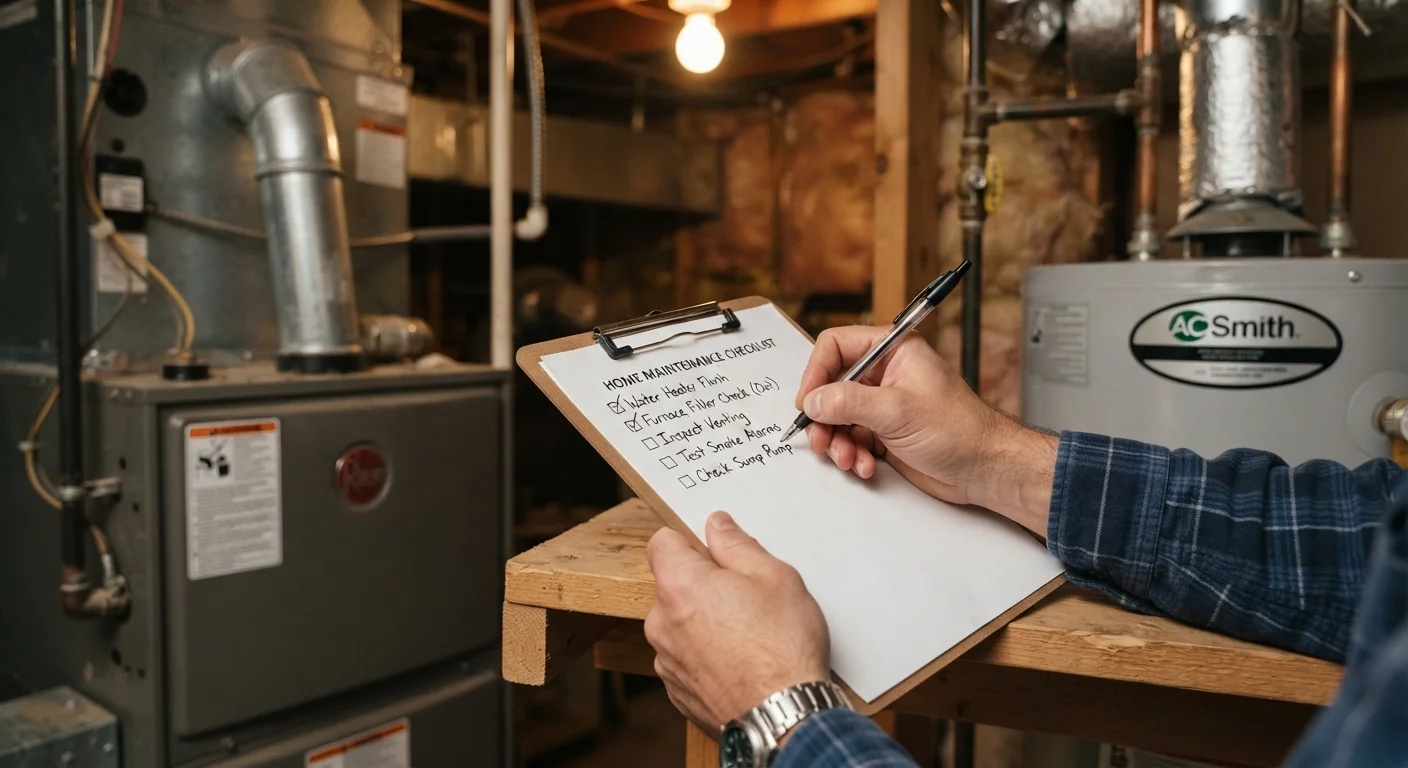
A short monthly checklist takes most homeowners under 30 minutes and covers the systems most likely to develop problems quietly. Check each item below at least once a month:
- Inspect the HVAC air filter and replace it if it looks gray or clogged. The frequency depends on filter thickness and household conditions, but monthly inspection prevents buildup that strains the blower motor.
- Test smoke detectors and carbon monoxide alarms by pressing the test button. Replace batteries at least once a year, or immediately if the low-battery chirp begins.
- Check under sinks for moisture, soft cabinet flooring, or discoloration that could indicate a slow leak.
- Run water in any infrequently used fixtures (guest bathroom sinks, floor drains) to prevent drain traps from drying out and allowing sewer gases into the home.
These checks do not require tools or technical knowledge. The goal is to catch changes before they progress. For a broader view of what often gets skipped, see seasonal maintenance tasks most homeowners overlook.
Seasonal maintenance: what to check and when
Some maintenance tasks align with the change of seasons, because weather shifts stress specific systems in predictable ways.
Spring
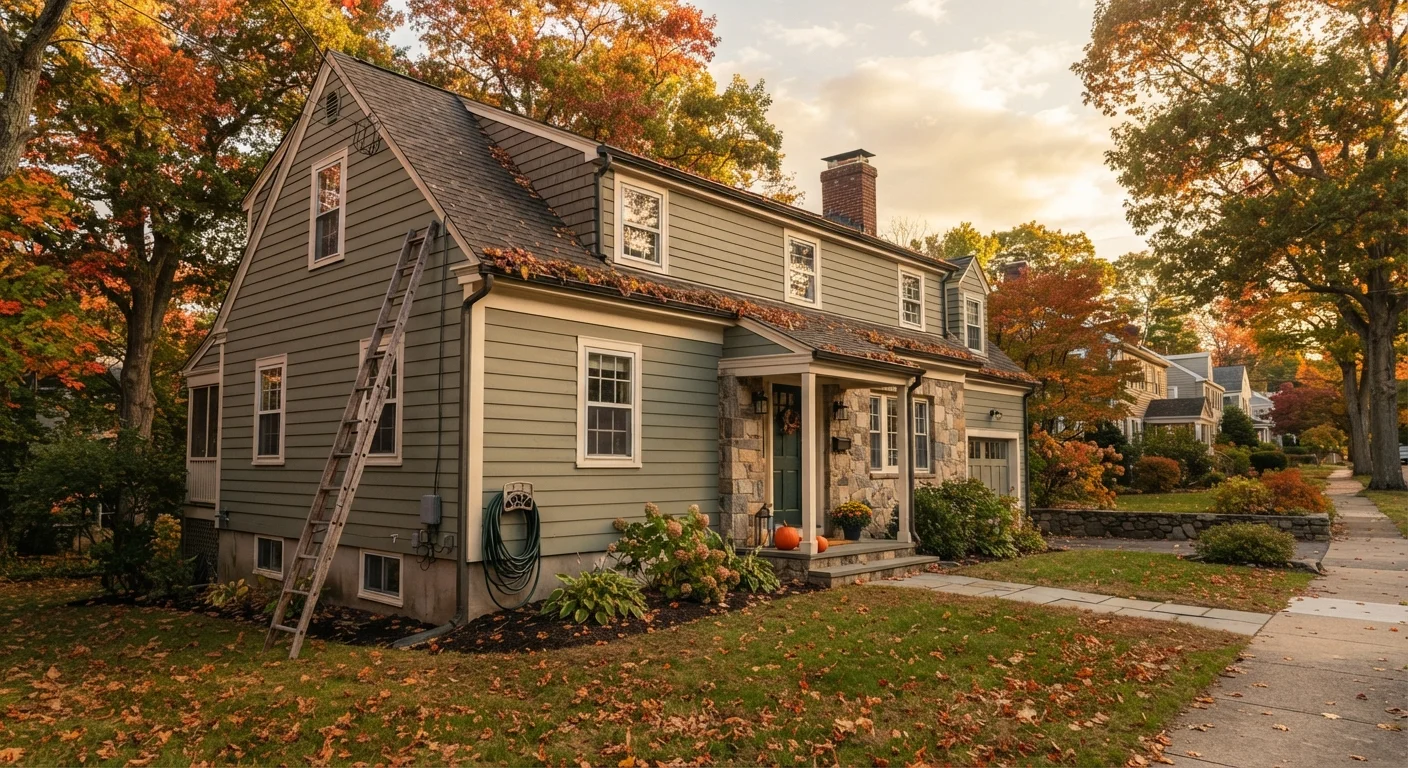
- Inspect the roof for missing or lifted shingles after winter weather. Binoculars work fine for a ground-level look; hire a roofer if you need a closer inspection.
- Clean gutters of debris from winter storms and check that downspouts direct water away from the foundation.
- Test the air conditioning system before the first hot week by running it and confirming it reaches the set temperature.
Fall
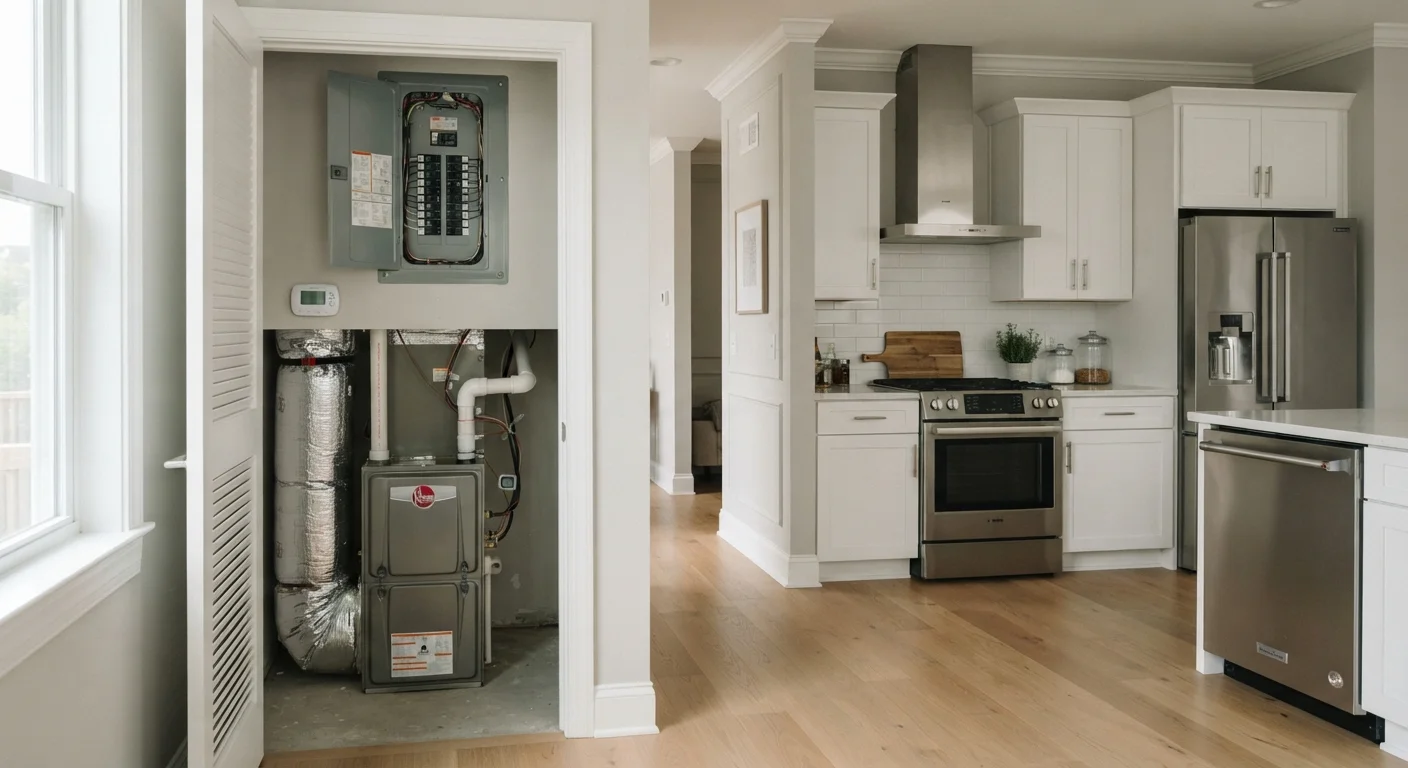
- Have the heating system serviced by a licensed HVAC technician before cold weather arrives. This is especially important for gas furnaces, where a cracked heat exchanger can release carbon monoxide.
- Seal gaps around windows and doors with fresh caulk or weatherstripping to reduce heating costs.
- Drain outdoor hoses and shut off exterior spigots to prevent pipes from freezing.
Do not skip electrical, gas, or structural work
Tasks involving your electrical panel, gas lines, roof structure, or load-bearing walls carry serious safety risks and often require permits. Attempting these without proper licensing can void your homeowners insurance, create code violations, and cause injury. Always hire a qualified, licensed professional for this category of work.
When to hire a professional
Knowing the boundary between a DIY task and a professional job is one of the most useful skills a new homeowner can develop. As a general rule, any work that involves your home's electrical panel, gas supply lines, main plumbing stack, or roof structure belongs in the hands of a licensed contractor. These are not judgment calls about skill level; they are areas where errors carry legal, insurance, and safety consequences.
When you do hire help, getting more than one written estimate and checking that the contractor carries liability insurance and holds the required license for your state are reasonable steps. The contractor preparation checklist walks through what to gather before a professional arrives. For guidance on budgeting for larger projects, financial planning basics can provide a starting point.
Build a home maintenance binder
Keep a physical or digital folder with appliance manuals, warranty documents, service receipts, and a copy of your maintenance schedule. When a repair technician visits, having model numbers and service history on hand can shorten the job and reduce costs.
Budgeting for home maintenance
A common planning guideline suggests setting aside roughly 1% of the home's purchase price annually for maintenance. This is a general estimate, not a prediction of actual costs; older homes and those with aging roofs, HVAC systems, or plumbing may require more. The point of the guideline is to have a dedicated fund so that routine costs do not feel like financial emergencies.
Some homeowners consider a home warranty to cover breakdowns of covered appliances and systems. Before purchasing one, reading the actual contract is worth the time, because coverage exclusions, service call fees, and claim limits vary considerably. The article on what home warranty coverage actually includes breaks down what these contracts typically do and do not cover.
Tracking maintenance spending in a simple spreadsheet or budgeting app also helps when selling the home later, because documented upkeep can support a listing's condition claims. See commonly overlooked seasonal tasks to round out your annual plan.