


How the tier system works
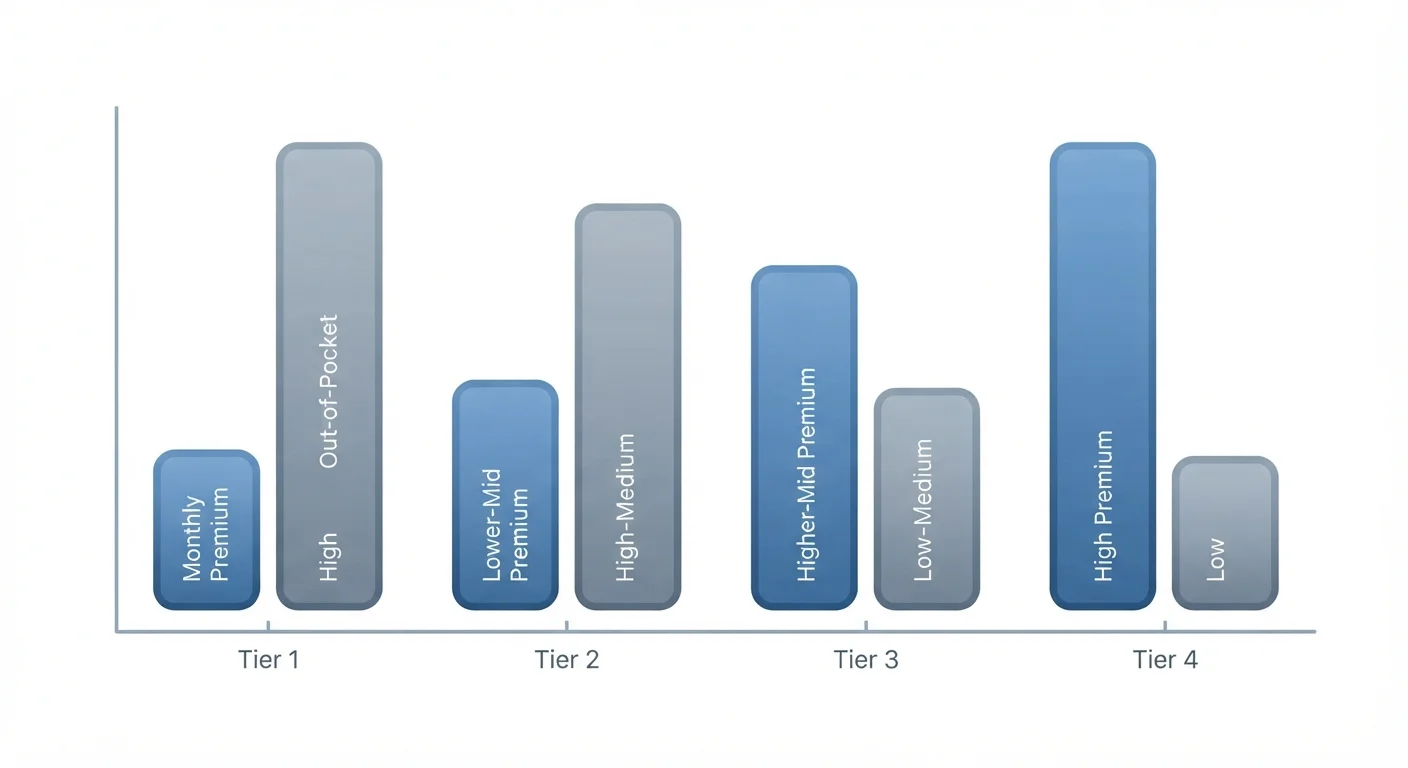
Every plan sold on the ACA Marketplace fits into one of four metal categories. The category does not grade a plan as better or worse overall. It describes one specific thing: how medical costs are divided between the insurer and the enrollee once care is received.
That division is measured by actuarial value (AV), a number that represents the share of covered expenses the plan pays on average across its entire pool of enrollees. Bronze sits at roughly 60% AV, Silver at 70%, Gold at 80%, and Platinum at 90%. As AV rises, the plan absorbs more of the cost when you use care, and your monthly premium rises accordingly.
Two things the tier does not tell you: the breadth of the provider network and the quality of care. A Gold plan from one insurer may have a narrower network than a Bronze plan from another. Always check network details separately. For a refresher on how premiums, deductibles, and coinsurance interact, see our plain-English guide to coverage terms.
What each tier looks like in practice
Bronze carries the lowest monthly premium and the highest cost-sharing when you need care. Deductibles are often several thousand dollars. This tier tends to work for people who are generally healthy, visit a doctor infrequently, and want to limit premium spending. The risk is a large bill if an unexpected illness or injury occurs.
Silver sits in the middle on both premium and cost-sharing. It is the only tier through which eligible enrollees can receive cost-sharing reductions (CSRs), federal subsidies that lower your deductible, copays, and coinsurance based on income. If your income qualifies you for CSRs, a Silver plan can deliver substantially more value than its sticker premium suggests.
Gold charges a higher premium but reduces what you pay at the point of care. Deductibles are lower and coinsurance rates are more favorable. This tier tends to suit people who have predictable, regular medical needs such as ongoing prescriptions or specialist visits.
Platinum has the highest premium and the lowest cost-sharing, with an AV of roughly 90%. For someone with high annual medical utilization, the reduced out-of-pocket spending can offset the premium difference. For someone who rarely uses care, Platinum's premium may exceed any savings on copays.
60%
Actuarial value of Bronze plans
The ACA sets actuarial value targets for each metal tier; Bronze plans cover roughly 60% of average covered medical costs across enrollees.
90%
Actuarial value of Platinum plans
Platinum plans are designed to cover roughly 90% of average covered costs, leaving enrollees responsible for about 10% through copays and coinsurance.
Silver only
Tiers eligible for cost-sharing reductions
Under the ACA, cost-sharing reductions are exclusively available on Silver-tier Marketplace plans for enrollees who meet income requirements.
Choosing a tier based on your actual costs
The most useful comparison is total annual cost, not just the monthly premium. Add up 12 months of premiums for each tier you are considering, then estimate what you would pay out of pocket under two scenarios: a low-use year and a year with significant care.
Each plan has an out-of-pocket maximum, the most you can be required to pay in a plan year for covered services. In a worst-case scenario, your cost is that maximum plus 12 months of premiums. Comparing those totals across tiers gives a more complete picture than the premium alone. For a structured approach to that comparison, see what to weigh beyond the monthly premium.
The tier also interacts with the plan type, such as HMO or PPO, which governs how you access care. Understanding HMO, PPO, EPO, and HDHP structures alongside the tier gives a fuller picture of what a plan actually costs and how it works. Before you commit, working through a personal checklist of health and financial factors is a practical next step: questions to answer before picking a health plan can guide that process.
This article is for general informational purposes only and is not personalized insurance, financial, or medical advice. Coverage terms, costs, and eligibility rules vary by plan and by state. Consult a licensed insurance agent or a certified ACA navigator for guidance on your specific situation.