

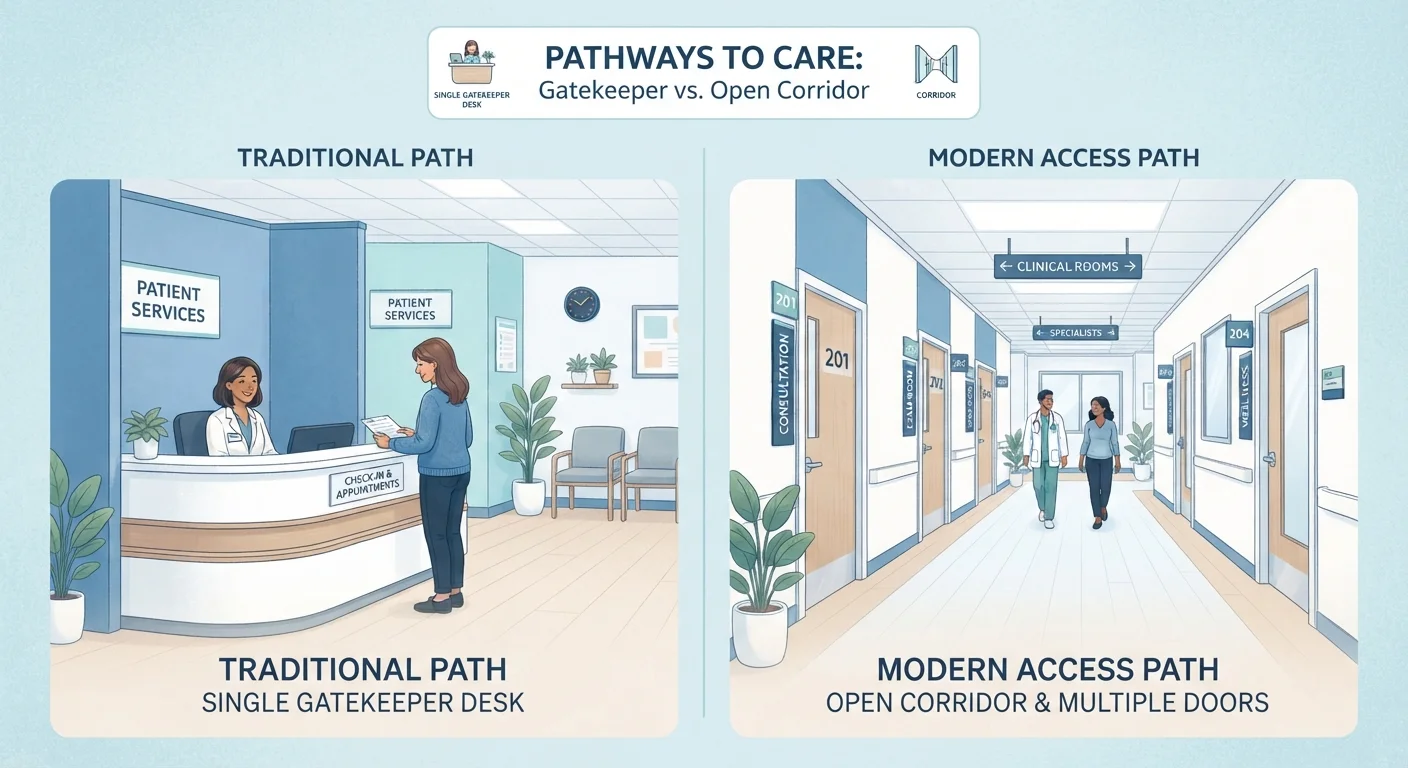
How each plan structures your care
An HMO requires you to choose a primary care physician (PCP), a doctor who coordinates all of your care. To see a specialist, you normally need a referral from that PCP. Care is only covered within the plan's network except in a genuine emergency. Because the insurer negotiates tightly with a defined group of providers, premiums and copays tend to be lower.
A PPO does not require a PCP or referrals. You can go directly to a specialist, and the plan covers both in-network and out-of-network providers, though out-of-network visits cost more. That flexibility comes with higher monthly premiums and, often, a higher deductible.
For a broader look at how plan types differ, see how HMO, PPO, EPO, and HDHP plans compare.

Cost differences worth understanding
Premium is the monthly amount you pay regardless of whether you use care. HMOs almost always carry a lower premium than comparable PPOs. That difference can add up to hundreds of dollars a year, so it matters even if you stay healthy.
Beyond the premium, you will encounter a deductible (the amount you pay before insurance shares costs), copays (fixed amounts per visit), and coinsurance (your percentage of the bill after the deductible). PPOs frequently have higher deductibles and coinsurance rates, especially for out-of-network services.
Understanding how deductibles, out-of-pocket maximums, and copays interact helps you project what a plan will actually cost you in a given year, not just month to month.
| Criterion | HMO | PPO |
|---|---|---|
| Monthly premium | Generally lower | Generally higher |
| Requires PCP referral for specialists | Yes | No |
| Out-of-network coverage | Emergency only | Yes, at higher cost sharing |
| Network size | Narrower, defined network | Broader, two-tier network |
| Deductible | Often lower | Often higher, especially out-of-network |
| Care coordination | Managed through PCP | Self-directed by patient |
Network access and referrals
Network access is where the two plan types diverge most visibly. In an HMO, going outside the network means the plan pays nothing, outside of federally required emergency coverage. If your preferred doctor or a specialist you need is not in the network, you pay the full cost yourself.
PPOs have two cost tiers: in-network (lower cost sharing) and out-of-network (higher cost sharing). You are not locked out entirely, but out-of-network bills can be substantial. Balance billing, where an out-of-network provider charges the difference between their rate and what your insurer pays, can add unexpected costs. The No Surprises Act (effective 2022) limits balance billing in some situations, but it does not eliminate it for all scheduled out-of-network care.
Seniors enrolled in Medicare Advantage plans should note that both HMO and PPO versions exist within that program. Medicare Advantage HMOs follow the same referral and network rules described above. Consult medicare.gov or a licensed Medicare counselor for guidance specific to your situation.
Which cost structure fits your situation
If you use a small number of providers for routine care and your doctors are in a given HMO network, the lower premiums make a real financial difference. The referral process adds a step, but it rarely delays necessary care significantly for common conditions.
If you manage a chronic condition involving multiple specialists, or if you want to keep seeing a doctor who is not in a narrow network, the additional PPO premium may be worth it. Compare total annual cost, not just the monthly premium, by estimating how often you visit providers and what cost-sharing applies each time. What to examine beyond the monthly premium walks through that fuller comparison.
Before you decide, work through your own health history, budget, and provider preferences. A structured checklist of questions to answer before picking a health plan can organize that process. For foundational terminology, a plain-English guide to how coverage works covers premiums, deductibles, and cost-sharing in detail.
This article is for general informational purposes only and is not personalized insurance, financial, or medical advice. Plan terms, network composition, and costs vary by insurer and region. Read actual plan documents and consult a licensed insurance agent or broker before enrolling in any health plan.