
Why plan type matters before you compare premiums
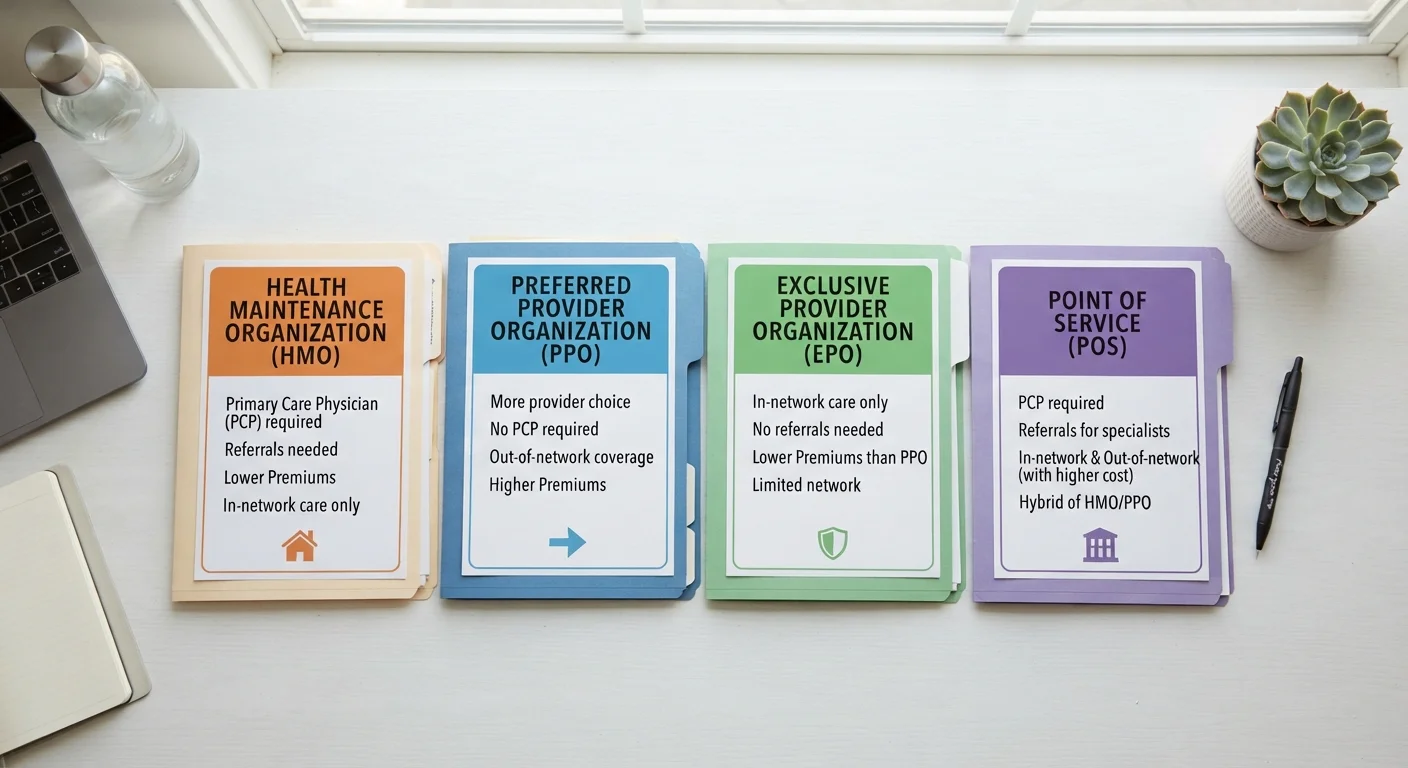
Most people look at the monthly premium first when comparing health plans. The plan type, however, shapes how and where you get care, whether you need a referral to see a specialist, and how much you pay when something unexpected happens. Four structures dominate the individual and employer market: HMO, PPO, EPO, and HDHP. Each handles networks and cost-sharing differently.
Before weighing costs, see our plain-English guide to how coverage works to get comfortable with terms like deductibles, copays, and coinsurance. Those definitions matter when reading the plan summaries below.
| HMO referral required | Yes, from a primary care physician |
| PPO referral required | No |
| EPO out-of-network coverage | Emergency only |
| HDHP HSA eligible | Yes, when plan meets IRS deductible thresholds (IRS Publication 969) |
| Typical premium level: HMO | Lower |
| Typical premium level: PPO | Higher |
| Typical premium level: EPO | Moderate |
| Typical premium level: HDHP | Lower (higher deductible applies) |
HMO: structured care through a primary doctor
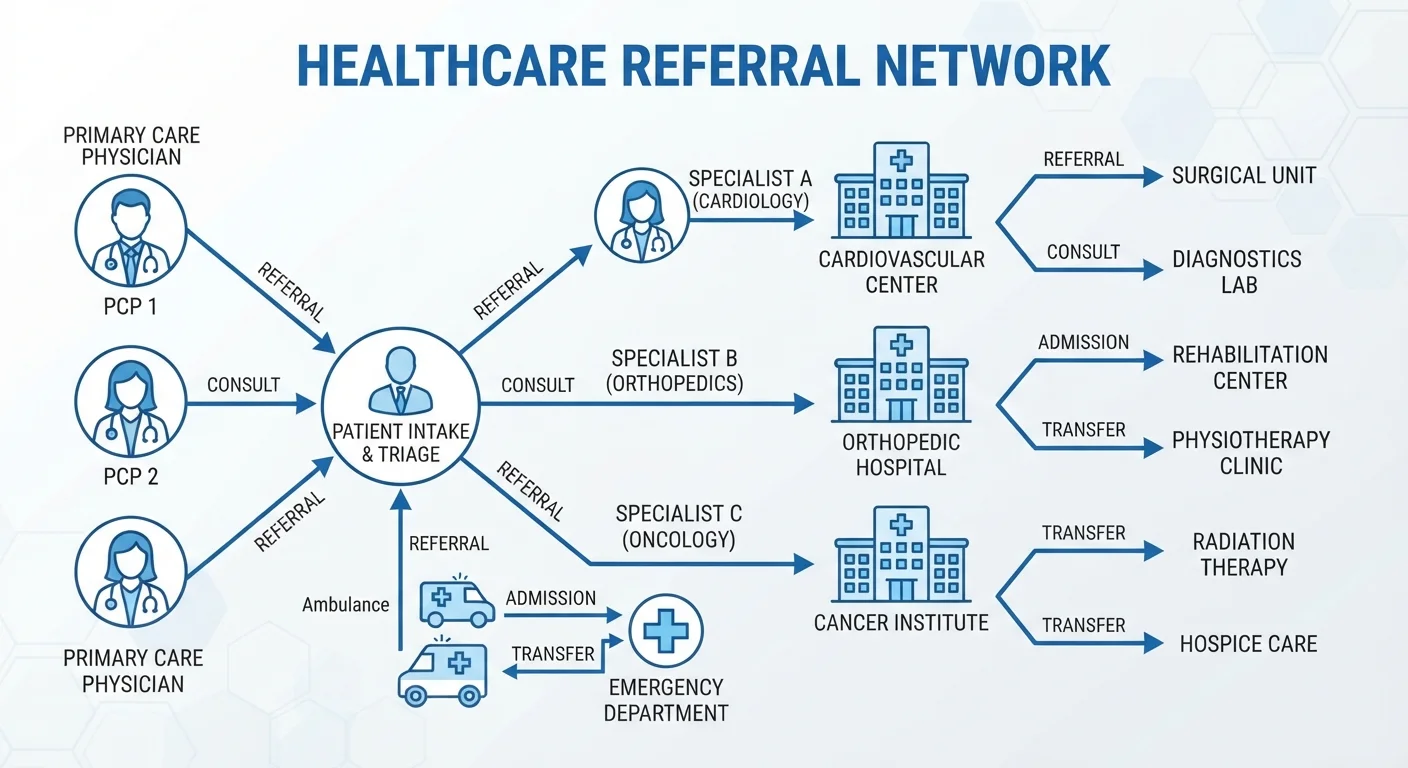
A Health Maintenance Organization (HMO) requires you to choose a primary care physician (PCP). Your PCP coordinates your care and, in most cases, must give you a referral before you can see a specialist. All care generally must come from providers inside the plan's network; out-of-network visits are not covered except in a documented emergency.
The trade-off is predictability. Because the network is managed and referrals are tracked, HMOs often carry lower premiums and lower out-of-pocket costs than other plan types. People who have a trusted primary care doctor and do not regularly need specialist access tend to find HMOs workable.
For seniors comparing Medicare Advantage options, many plans are structured as HMOs. Check whether your current doctors are in-network before enrolling, since switching mid-year is generally not allowed outside specific qualifying events.
PPO: flexibility at a higher price
A Preferred Provider Organization (PPO) does not require a PCP or referrals. You can see any doctor or specialist, in-network or out-of-network, without prior authorization. In-network care costs less, but out-of-network care is covered, usually at a higher cost-sharing rate rather than a flat denial.
PPOs carry higher premiums on average. They work well for people who manage ongoing conditions with multiple specialists, travel frequently, or live in rural areas where network access is limited. The wider flexibility comes directly from the higher monthly cost.
When comparing plans side by side, the factors beyond the monthly premium article walks through how to evaluate network breadth, which matters especially with PPO plans where in-network and out-of-network cost-sharing can differ sharply.
EPO: network-only coverage without referrals
An Exclusive Provider Organization (EPO) sits between an HMO and a PPO. Like a PPO, an EPO does not require referrals to see specialists. Like an HMO, it covers only in-network providers, with no out-of-network benefits outside emergencies.
EPOs often have lower premiums than PPOs because the insurer can negotiate rates within a closed network. If all your current doctors are in the network, this plan type can deliver meaningful savings. The risk is that any out-of-network care, planned or unplanned, falls entirely to you. Confirm that any hospital you might realistically use is in-network, including the facility's doctors, because billing for anesthesiology or radiology sometimes comes from separate groups that may not participate in the same network.
HDHP: lower premiums paired with a health savings account
A High-Deductible Health Plan (HDHP) has a higher annual deductible than conventional plans. The Internal Revenue Service (IRS) sets minimum thresholds each year that a plan must meet to qualify as an HDHP. The benefit is a lower monthly premium and eligibility to open a Health Savings Account (HSA).
An HSA lets you set aside pre-tax dollars to pay for qualified medical expenses. Unused funds roll over year to year, unlike a Flexible Spending Account (FSA). For generally healthy adults who rarely use care, an HDHP paired with consistent HSA contributions can reduce total annual healthcare spending. For someone with frequent medical needs, paying the full deductible before coverage kicks in can make the plan more expensive overall.
Understanding how your deductible interacts with your out-of-pocket maximum is important with HDHPs. The difference between deductible, out-of-pocket maximum, and copay article explains how those figures interact across a plan year.
HDHPs can follow an HMO, PPO, or EPO network structure. The label describes the cost-sharing design, not the network rules.
This article is for general informational purposes only and does not constitute medical, financial, or insurance advice. Plan structures, rules, and costs vary by insurer and state. Review your Summary of Benefits and Coverage document and consult a licensed insurance agent or a qualified professional before making enrollment decisions. Always work with a healthcare professional for personal medical questions or concerns.