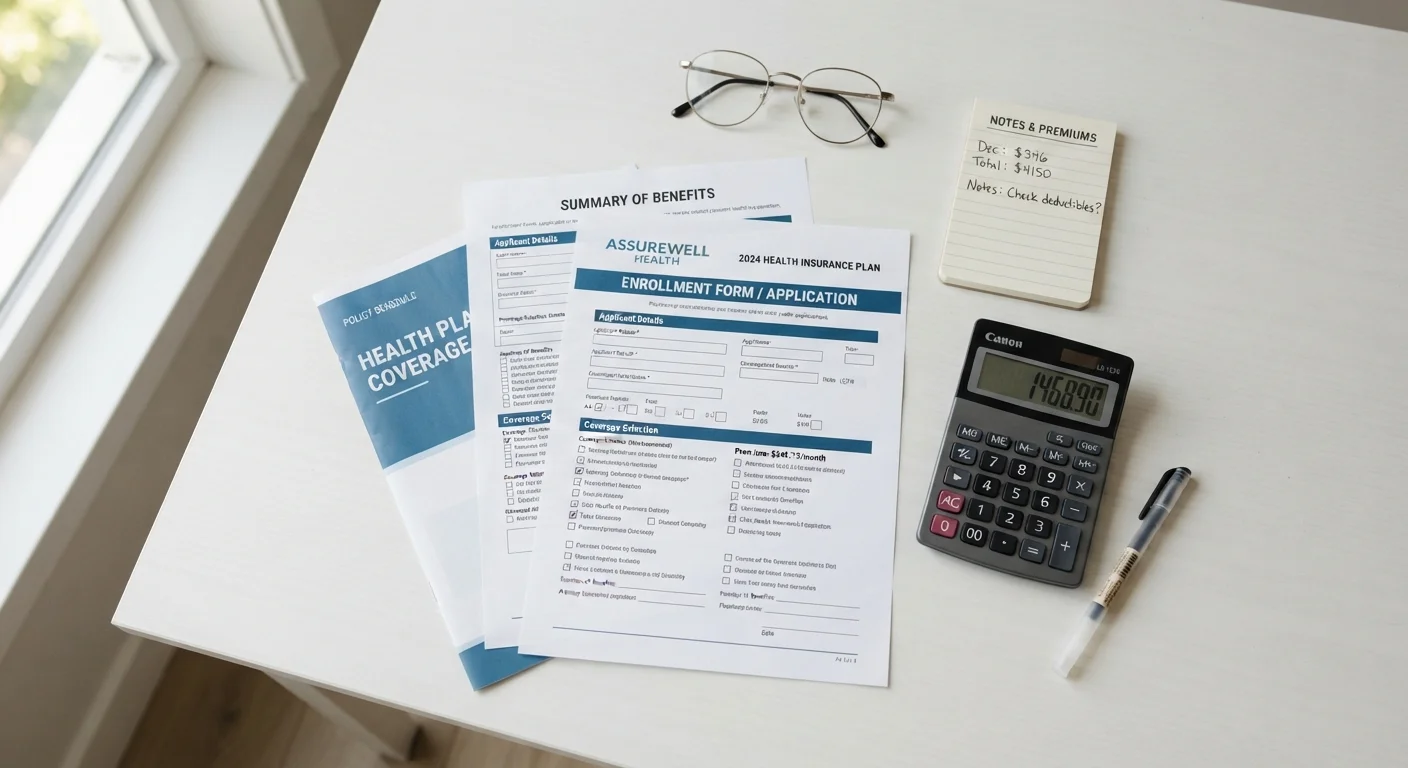
Work through this checklist of personal health, financial, and provider factors before committing to any health insurance plan.
Why this checklist matters before you compare plans
Health insurance decisions carry real financial and medical consequences, so it is worth pausing before you sort through plan options. Most people focus on the monthly premium (the amount you pay each month to keep coverage active), but that number tells only part of the story. A plan with a low premium often has a high deductible (the amount you pay out of pocket before insurance begins to share costs), which can make it more expensive overall if you use care regularly.
This checklist is general health insurance information and education. It is not personalized medical, financial, or legal advice. For decisions specific to your situation, consult a licensed insurance agent, a qualified financial adviser, or a healthcare professional.
Work through each section honestly. The answers will narrow your options and give you sharper questions to ask when you compare plans side by side.
Your health situation
Start with what you actually use. Think about the past 12 months: how often did you see a doctor, fill a prescription, or need specialist care? Your realistic care pattern is the foundation of a sound plan choice.
Your health situation
List every prescription you take and note the dosage, then check whether each plan's drug formulary (its covered drug list) includes them at an affordable tier.Must
Write down every specialist or physician you want to keep seeing and confirm they are in-network for any plan you consider.Must
Estimate how many primary care visits, specialist visits, and lab tests you typically use in a year so you can project realistic out-of-pocket costs.Must
Note any planned procedures, pregnancies, or ongoing treatments coming up, since a plan switch mid-year can affect continuity of care and cost-sharing.Must
Confirm whether any of your providers are only available through a specific hospital system, which may narrow which plan networks work for you.Should
Plan type and network
Identify which plan structure fits your care habits: an HMO (requires a primary care physician referral for specialists, lower cost) or a PPO (more provider flexibility, typically higher premium).Must
Check whether an EPO (exclusive provider organization, no out-of-network coverage except emergencies) or HDHP (high-deductible health plan, often paired with a health savings account) is available and suits your risk tolerance.Should
Verify the plan's network size in your area, especially if you live in a rural location where in-network options may be limited.Must
Confirm emergency and urgent care coverage rules, including whether out-of-area care is covered if you travel frequently.Should
Cost structure
Compare the annual deductible across plans and ask yourself whether you have savings to cover that amount if you need care early in the plan year.Must
Find the out-of-pocket maximum for each plan and treat it as your worst-case annual exposure beyond the premium.Must
Calculate your total annual cost by multiplying the monthly premium by 12, then adding a realistic estimate of copays and coinsurance based on your expected care use.Must
Check whether the plan is compatible with a Health Savings Account (HSA) if you want a tax-advantaged way to save for medical expenses.Nice to have
Special circumstances
If you are approaching 65 or already enrolled in Medicare, confirm whether you need a supplemental (Medigap) policy or a Medicare Advantage plan rather than a standard marketplace plan.Must
If you have a chronic condition, verify that the plan's disease management programs and specialist networks match your ongoing care needs.Must
If you travel or spend time in multiple states, check whether the plan provides adequate coverage outside your home region.Should
Your finances and cost tolerance
Health plans split costs between you and the insurer in several ways. The premium is the most visible, but copays (flat fees per visit), coinsurance (your percentage share after the deductible), and the out-of-pocket maximum (the most you will pay in a year before the plan covers 100%) all affect total spending. Think through your budget at each layer.
For seniors evaluating Medicare options, the Medicare enrollment checklist covers cost-sharing structures specific to Parts A, B, C, and D.
Low premiums can mean higher total costs
A plan with a low monthly premium often has a high deductible or high coinsurance. If you use care regularly, you may pay more in total than you would under a plan with a higher premium and lower cost-sharing. Run a full-year cost estimate, not just a premium comparison, before deciding.
Putting your answers to work
Once you have worked through the checklist, you have a profile: how much care you need, what you can afford month to month versus in a crisis, which doctors and drugs matter, and whether your situation calls for broad network access or tighter managed care. Bring that profile to any plan comparison tool or licensed agent conversation. The Senior hub has additional resources if Medicare or supplemental coverage is part of your picture.
This article is for informational purposes only. It is not medical, financial, or legal advice. Coverage terms, costs, and eligibility vary by plan and by state. Always read the actual plan documents and speak with a licensed insurance professional before enrolling in any health plan.
Health Editorial Team is the collective byline for our editorial team and contributor network. Articles published under this byline or an editorial pen name are researched, written, and reviewed according to our editorial standards for clarity, consistency, and independence before publication.
The content provided on our blog site traverses numerous categories, offering readers valuable and practical information. Readers can use the editorial team’s research and data to gain more insights into their topics of interest. However, they are requested not to treat the articles as conclusive. The website team cannot be held responsible for differences in data or inaccuracies found across other platforms. Please also note that the site might also miss out on various schemes and offers available that the readers may find more beneficial than the ones we cover.