

Why your premium is not fixed
Auto insurance premiums are not permanent. Insurers recalculate rates at renewal based on updated information about you, your vehicle, and sometimes your location. That means the rate you locked in two years ago may not reflect where you stand today, for better or worse.
Most drivers focus on their premium only when the bill goes up. The flip side is that several factors can push it down, and some of those changes are within your control. This article covers the main ones so you can recognize when a lower rate may be within reach.
This article is general information about auto insurance and is not personalized financial or insurance advice. Coverage terms, discounts, and eligibility vary by insurer and state. Read your policy documents and consult a licensed insurance agent for guidance specific to your situation.
Factors that can reduce what you pay
The list below covers driver behavior, policy structure, and life circumstances. Not every factor applies to every driver, and insurers weigh them differently. Use this as a starting checklist when you review your policy or shop for a new one.
Maintaining a clean driving record
Tickets, at-fault accidents, and DUI convictions raise your rate and typically stay on your record for three to five years, depending on the state. Once those incidents age off, your insurer may reduce your premium at renewal. Drivers who go several years without any violations often qualify for good-driver discounts, which some insurers apply automatically and others require you to request.
The connection between your record and your rate is direct: insurers treat past incidents as a predictor of future claims. A clean record over time is the clearest signal that your risk has declined.
A clean driving record over several years is the clearest signal to insurers that your risk has declined.
Completing a defensive driving course
Many insurers offer a discount when you complete an approved defensive driving or driver safety course. The discount amount varies, but it is typically applied for a set period, often one to three years. Seniors in particular may find these courses worth checking because some states require insurers to offer a discount to older drivers who complete an approved program.
Before enrolling, confirm with your insurer which courses they accept. Not every program qualifies, and the paperwork to claim the discount usually needs to be submitted after completion.
Confirm which courses your insurer accepts before enrolling so the discount actually applies.
Driving fewer miles
If your annual mileage drops significantly, such as after retirement or a job change that eliminates a long commute, your insurer may reduce your premium. Some insurers ask for mileage estimates at renewal; others offer usage-based or pay-per-mile programs that price coverage partly on how much you actually drive.
Lower mileage means less time on the road, which statistically reduces exposure to accidents. If your driving habits have changed and you have not told your insurer, it is worth having that conversation at your next renewal.
If your annual mileage has dropped significantly, notify your insurer at renewal.
Bundling policies with one insurer
Carrying your auto policy with the same insurer that handles your home, renters, or life coverage often qualifies you for a multi-policy discount. The savings vary by insurer and state, but bundling is one of the more consistent discounts available because it reduces administrative costs for the insurer and increases customer retention.
Bundling is worth evaluating, not just assumed to be cheaper. In some cases, two separate insurers may still come out lower in total cost. Run the numbers both ways before committing.
Run the numbers both ways before assuming a bundle is always the lower-cost option.
Raising your deductible
Your deductible is the amount you pay out of pocket before your insurer covers a claim on collision or comprehensive coverage. Choosing a higher deductible lowers your premium because you are absorbing more of the initial risk yourself. Common deductible amounts range from $250 to $1,500 or more.
This trade-off only makes sense if you can comfortably cover the higher deductible after an accident. Setting it higher than you can realistically afford in a pinch creates a different kind of financial problem.
Only raise your deductible to an amount you could realistically pay after an accident.
Adjusting coverage on an older vehicle
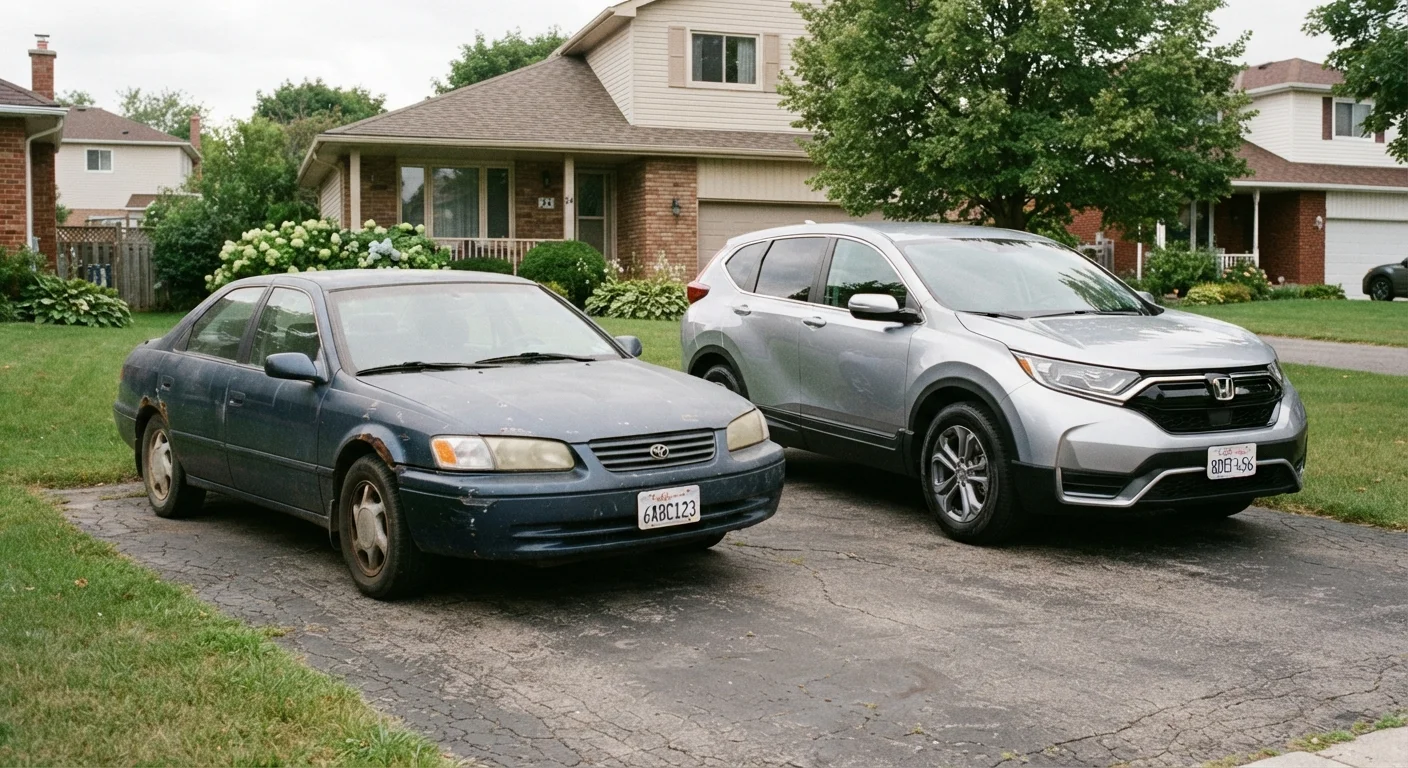
As a car depreciates, the math behind collision and comprehensive coverage shifts. If the vehicle's actual cash value is low enough, the payout after a total loss may not justify the combined cost of the coverage and the deductible. Dropping or reducing these optional coverages on an older car can lower your premium meaningfully.
This does not mean dropping coverage without thinking it through. how your vehicle's age and value shape the coverage conversation covers the specific factors to weigh before making that call. Also check situations where minimum-coverage insurance falls short so you understand what gaps might open up.
On an older vehicle, the payout after a total loss may not justify keeping collision and comprehensive coverage.
Improving your credit-based insurance score
In most states, insurers are permitted to use a credit-based insurance score as one factor in setting rates. This score is not identical to a standard credit score, but it draws on similar data: payment history, outstanding debt, and length of credit history. Drivers with stronger credit profiles generally pay lower premiums in states where this practice is allowed.
A few states, including California, Hawaii, and Massachusetts, prohibit or restrict the use of credit in auto insurance pricing. If you live elsewhere and your credit has improved since your last application, that change may not automatically reflect in your current rate. Requesting a new quote or asking your insurer to re-evaluate can surface any difference.
If your credit has improved since your last application, request a re-evaluation or new quote.
Shopping the market periodically
Your current insurer priced your policy based on your profile at the time you applied. If your circumstances have changed and you have not shopped around, you may be paying more than your current risk profile warrants. Getting quotes from other insurers every year or two is a straightforward way to check whether your rate is still competitive.
Keep in mind that switching mid-term usually means forfeiting a loyalty discount if your insurer offers one, so timing matters. Also, common auto insurance myths vs. facts covers some misconceptions about how switching affects your coverage history.
Getting quotes from other insurers periodically is a straightforward way to check whether your rate is still competitive.

Because filing a claim can have the opposite effect on your rate, it helps to understand both sides. See what happens to your premium after a claim for how insurers handle surcharges after a loss.
Discounts vary by state and insurer
Not every discount listed here is available from every insurer or in every state. State regulations sometimes limit what factors insurers can use in pricing. When you contact your insurer, ask specifically which discounts you currently receive and which ones you may qualify for but have not yet claimed.
Putting it together
No single factor guarantees a lower rate, and insurers are not required to offer every discount in every state. What you can do is audit your current policy annually, check whether your driving record or life circumstances have changed, and ask your insurer directly which discounts you qualify for. If the answers are unsatisfying, getting quotes from other insurers is a reasonable next step. Your current rate reflects a snapshot from when you last applied; your actual risk profile may look quite different now.
For drivers thinking about whether their current coverage levels still fit their vehicle, how your vehicle's age and value shape the coverage conversation walks through how depreciation factors into those decisions.