

Why these myths stick around
Auto insurance is complicated enough that most drivers never read their full policy. That gap between what people assume and what a policy actually says is where misconceptions take hold. Some myths get passed down from friends and family; others come from outdated information or half-truths that were never corrected. The result is that drivers end up underinsured, overpaying, or both.
This article goes through six of the most common misconceptions, explains what the facts actually are, and connects each one to practical decisions you may face when shopping for or reviewing a policy. If you are new to car ownership, a practical starting guide to auto insurance can help you build a fuller foundation before you commit to a policy.
This article is for general informational purposes only and is not personalized insurance or financial advice. Coverage terms, eligibility, and pricing vary by insurer, policy, and state. Consult a licensed insurance agent or adviser for guidance specific to your situation.
Six myths, corrected
Myth
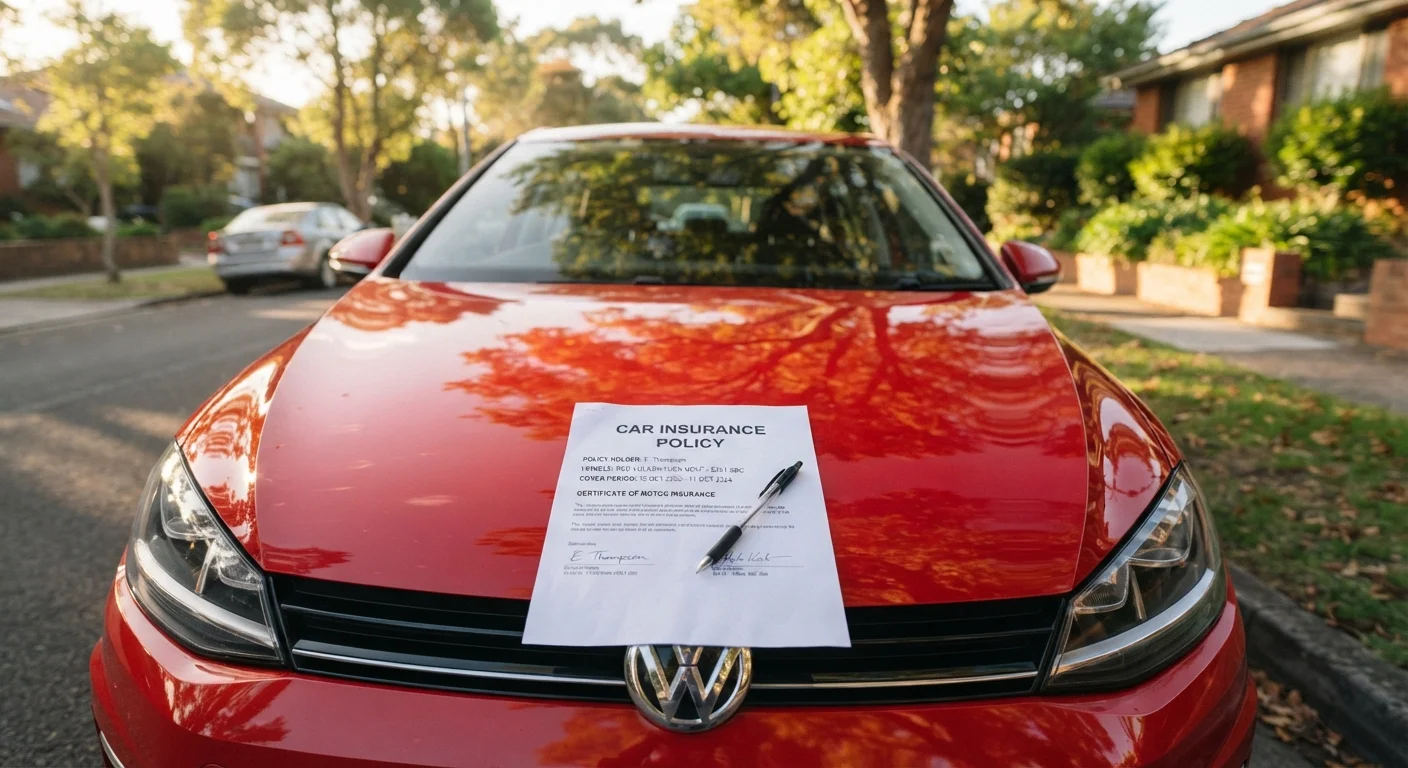
Red cars cost more to insure because insurers charge a premium for flashy colors.
Fact
Insurers do not use vehicle color as a rating factor. Your rate is based on the make, model, trim, engine size, age of the vehicle, and your driving record.
This is one of the most persistent beliefs in auto insurance, and it has no factual basis. Insurers in the U.S. do not ask for your car's color when you apply for a policy. What they do look at includes the vehicle's body type, its repair costs, its safety ratings, and how often that particular model is stolen. A red sports car may cost more to insure than a red sedan, but the color itself is irrelevant.
Myth
Your personal auto policy covers you when you drive for a rideshare or delivery service.
Fact
Most personal auto policies exclude coverage during commercial or gig-work driving. A gap in coverage often exists between your personal policy and the platform's commercial policy.
When you log into a rideshare or delivery app, your personal insurer may consider that commercial use and deny a claim. Platforms typically provide some coverage once you accept a ride or delivery, but the window between opening the app and accepting a job is often uninsured. Drivers doing this kind of work should ask their insurer about a rideshare endorsement. For a fuller picture of where personal coverage ends, see personal vs. commercial auto coverage.
Myth
State minimum coverage is enough protection for most drivers.
Fact
State minimums are the legal floor, not a coverage recommendation. They protect other parties in an accident you cause, not your own vehicle or medical costs.
Liability minimums vary widely by state, and in many states they are low enough that a single serious accident could leave you personally responsible for costs that exceed the limit. Minimum coverage also does not include collision or comprehensive, meaning your own car is not covered for damage or theft. Understanding what each coverage type does is a useful first step before deciding how much is enough for your situation.
Myth
Credit score has nothing to do with car insurance rates.
Fact
In most U.S. states, insurers use a credit-based insurance score as one factor in setting premiums. States including California, Hawaii, and Massachusetts have restricted or banned this practice.
A credit-based insurance score is not identical to your FICO score, but it draws on similar data: payment history, outstanding debt, and length of credit history. Insurers have found a statistical correlation between certain credit patterns and claim frequency, which is why many states permit it. If you live in a state that allows it, improving your credit over time can work in your favor. Several other factors can also reduce your premium over time.
Myth
Filing any claim will automatically raise your premium.
Fact
Whether your rate increases after a claim depends on fault, your insurer's policies, your claim history, and in some cases your state's regulations. Not every claim triggers a surcharge.
A not-at-fault claim, a glass replacement, or a single small claim on an otherwise clean record may not move your rate at all with some insurers. At-fault accidents involving significant damage or injury are more likely to result in a surcharge. Some policies include accident forgiveness for first-time incidents. How insurers assess fault and apply surcharges is worth reviewing before you decide whether to file.
Myth
Once a car is paid off, you can drop all coverage except the state minimum.
Fact
Dropping collision and comprehensive on an older vehicle can make financial sense in some cases, but it leaves you responsible for the full repair or replacement cost if the car is damaged or stolen.
The math worth doing is comparing your annual premium for those coverages against the vehicle's current market value minus your deductible. If the premium is a large share of what the car is worth, dropping those coverages may be reasonable. If the car still holds meaningful value, keeping them protects you from an out-of-pocket loss that could exceed years of saved premiums.

Reading through these myths together, a pattern appears: most of them involve assuming that less coverage is fine, or that factors outside your driving behavior do not matter. Both assumptions can cost you. If any of these corrections prompt questions about your current policy, pulling out the declarations page and reading through the exclusions section is a reasonable next step.