
Why road trip budgets fall apart
Most road trip budgets fail not because of one large expense, but because fuel, food, and lodging each run 20 to 30 percent over estimate, and no single overrun feels significant until the total does. The fix is to build estimates from real numbers before you leave, not round figures guessed at while packing.
Several common beliefs about road trip costs lead travelers to underfund their trips. The sections below walk through how to build a workable budget from the ground up.
What you will need
Step-by-step: building your road trip budget
Work through these steps in order. Each one feeds into the next, so skipping fuel calculations, for example, makes your lodging and food numbers less reliable.
Calculate your fuel budget before choosing a route
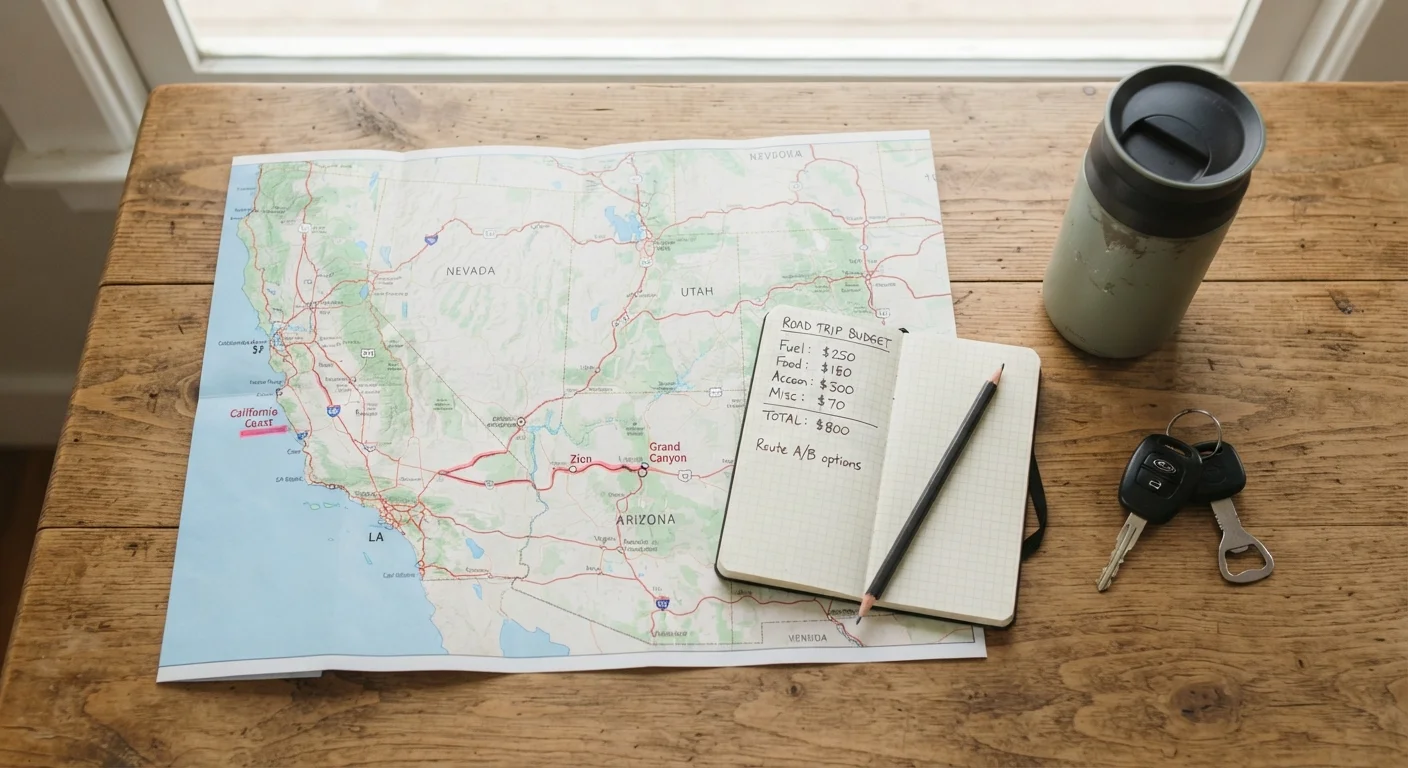
Start with math, not a map. Divide the total miles of your planned route by your vehicle's average miles per gallon. Multiply that number by the average gas price along the route. That gives you a baseline fuel cost.
For example, a 2,000-mile trip in a vehicle that gets 28 mpg requires roughly 71 gallons of fuel. At $3.50 per gallon, that is about $250 each way, or $500 round trip. If that number strains your budget, shortening the route or choosing a more fuel-efficient vehicle rental may make the trip viable.
Set a firm daily spending limit
Take your total available travel budget, subtract fixed costs (fuel, any pre-booked lodging, a travel insurance estimate), then divide what remains by the number of travel days. That daily number covers food, admission fees, incidentals, and any unplanned stops.
Writing this number down before you leave, and checking your receipts each evening, is more effective than trying to remember it on the road. See our guide to personal budget basics if you want a framework for structuring travel costs within your overall finances.
Plan lodging around free and low-cost options
Lodging is typically the largest variable expense on a road trip. Several categories cost far less than standard motels:
- Dispersed camping on Bureau of Land Management (BLM) land is free in many areas of the western U.S., subject to posted rules and stay limits.
- Developed campsites at national forests and state parks usually run $15 to $35 per night.
- If you stay in motels, mid-week nights and rural locations are consistently less expensive than weekend stays near cities.
Mixing free camping nights with occasional paid lodging can cut total lodging costs significantly compared to booking hotels every night.
Build your itinerary around free attractions
National parks charge entry fees, but national monuments, national forests, BLM recreation areas, and most state historical sites do not. Many scenic byways are free to drive. If your route includes several national parks, calculate whether an America the Beautiful annual pass (a single flat fee covering most federal sites) costs less than paying individual entry fees.
Common travel cost myths often include the assumption that road trips require paid attractions to be worthwhile. A significant portion of what makes a U.S. road trip memorable, scenery, small towns, roadside geology, is accessible at no cost.
Budget for food without eating out every meal
Restaurant meals add up faster than most travelers expect. A cooler with groceries purchased at a supermarket handles breakfasts and lunches at a fraction of sit-down costs. Reserving restaurant meals for one per day, or for towns with notable local spots, keeps food spending predictable.
A rough rule: budget $15 to $25 per person per day for food if you are cooking most meals, versus $50 or more per person if eating out for all three. For a week-long trip with two travelers, that difference can be $350 or more.
Account for travel insurance and emergency costs
A road trip budget should include a line for unexpected costs: a flat tire, a minor medical issue, a vehicle breakdown. Travel insurance policies designed for domestic trips can cover trip interruption, emergency roadside assistance, or medical expenses depending on the plan. Policies vary widely in what they cover and exclude, so read the policy document before purchasing.
Travelers who skip insurance often save a small upfront amount but face much larger out-of-pocket costs when something goes wrong. Review our pre-trip checklist for a full list of financial and logistical items to confirm before departure.
This article is for general informational purposes only and does not constitute financial, insurance, or travel advice. Verify coverage details directly with any insurance provider before purchasing a policy.
Midweek travel saves money
Gas stations, campgrounds, and motels in tourist areas often have lower demand Monday through Thursday. If your schedule allows flexibility, shifting your departure to midweek can lower both lodging and fuel costs in some regions. This works especially well near national parks and coastal routes.
Keeping costs in check on the road
Planning controls most costs, but some decisions happen during the trip. A few habits help:
- Check your spending total each evening against your daily limit. A $15 overrun on day two is easy to absorb; the same pattern over seven days is not.
- Fill up in smaller towns rather than highway rest stops, where fuel prices are consistently higher.
- Use grocery stores in larger towns along the route rather than convenience stores at campgrounds.
If you are an older traveler or planning a longer route, senior travel planning considerations covers additional factors including health preparation and accessibility that affect both itinerary and budget.
Vehicle condition affects total cost
A road trip in a vehicle with deferred maintenance can turn a budget trip into an expensive one. Before departure, have a mechanic check tire condition and pressure, oil level, brakes, and belts. Repair costs on the road, away from your regular mechanic, are typically higher than preventive work done at home.
Free camping has rules you must follow
Dispersed camping on federal land is not a blanket permission to camp anywhere. Areas have posted stay limits (commonly 14 days), fire restrictions that change by season, and designated corridors where camping is prohibited. Check the relevant BLM or national forest website for the specific area before you go. Ignoring posted rules can result in fines.