

What a personal budget actually is
A personal budget is a written plan that tells your money where to go before the month begins. It lists how much income you expect, how much you plan to spend in each category, and how much you intend to save. The goal is to make sure those numbers balance.
Without a plan, spending decisions happen by default, often shaped by habit or the moment rather than by what you actually want your money to accomplish. A budget makes those decisions deliberate.
If financial vocabulary feels unfamiliar, the personal finance glossary covers the terms you will encounter most often when managing money.
Budgeting is general financial education
This article explains how personal budgets work in general terms. It is not personalized financial advice. For guidance specific to your situation, consider speaking with a certified financial planner or a nonprofit credit counselor.
The core components of a budget
Every budget, regardless of income level or format, has four parts:
Net income
The money you actually take home after taxes and any other deductions are removed from your paycheck. This is the number a budget is built on, not your gross (pre-tax) pay.
Fixed expense
A cost that stays the same each month, such as rent, a car payment, or a set loan installment. You can predict the amount in advance.
Variable expense
A cost that changes month to month, such as groceries, gas, or dining out. You control how much you spend in these categories.
Budget surplus
What remains when your total planned expenses and savings are less than your income. A surplus gives you options: build an emergency fund, pay down debt, or save for a goal.
Budget deficit
What happens when your planned spending exceeds your income. A deficit requires cutting costs, increasing income, or both.
- Income: All money coming in each month. Include wages, freelance pay, government benefits, and any other regular source. Use net income (take-home pay after taxes) rather than gross pay.
- Fixed expenses: Costs that stay the same each month, such as rent or mortgage, car payments, and set insurance premiums.
- Variable expenses: Costs that change month to month, such as groceries, utilities, gas, and entertainment.
- Savings: Money set aside for future goals or emergencies, treated as a planned expense rather than an afterthought.
Use net income, not gross pay
Always build your budget on what you actually deposit, not your salary before taxes. Using gross pay overstates what you have available and makes your numbers unreliable from the start.
When your income minus your total planned spending and savings equals zero, you have what some call a zero-based budget: every dollar has an assignment. If the number is positive, you have a surplus. If it is negative, you have a deficit that needs attention.
Fixed vs. variable expenses
The distinction between fixed and variable expenses matters because it shows you where flexibility exists.
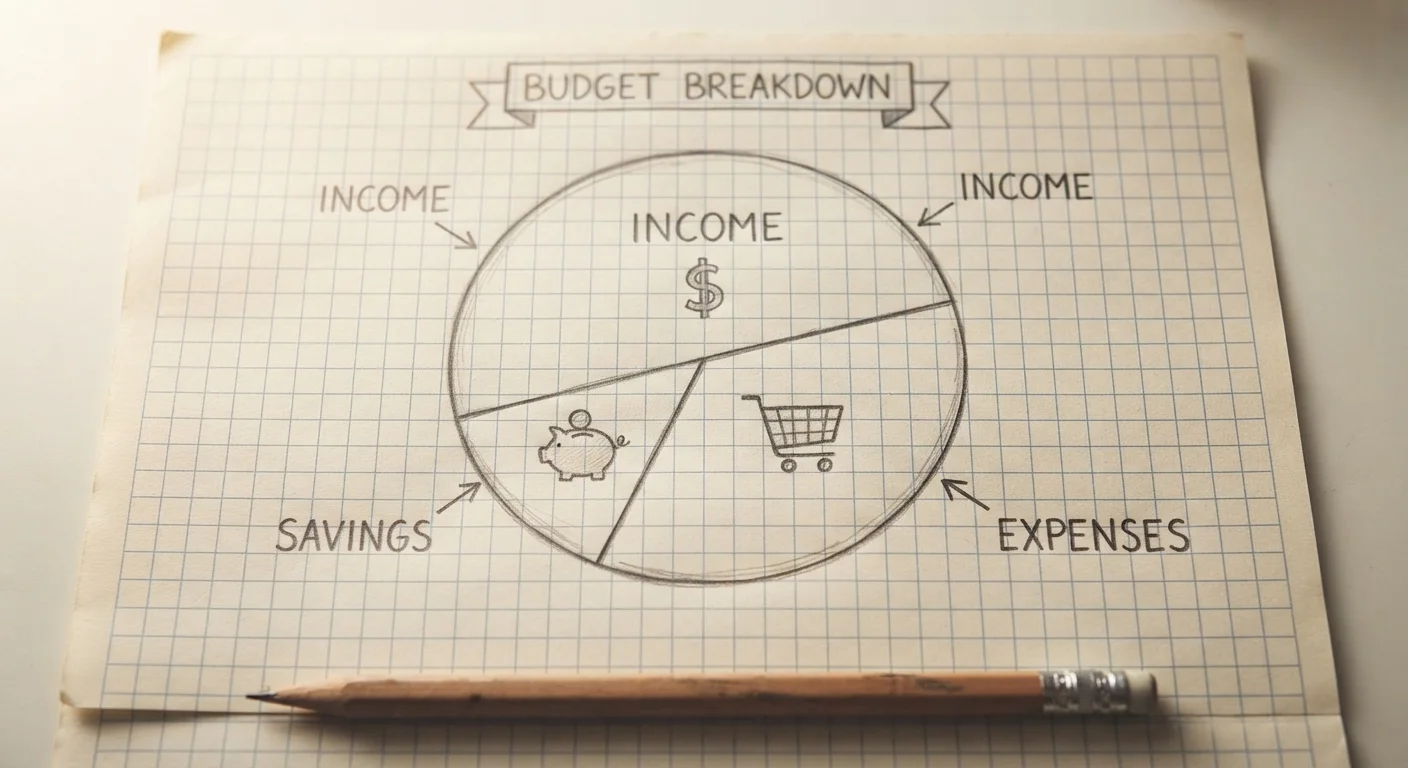
Fixed expenses are largely non-negotiable month to month. Rent is due, a car loan payment is due, and a set insurance premium does not change because your paycheck was smaller. These costs form the floor of your budget.
Variable expenses, by contrast, are adjustable. You can spend more or less on groceries, dining out, clothing, or subscriptions depending on what the month requires. This is where most budget adjustments happen when income drops or a financial goal demands more saving.
A common mistake is treating variable expenses as if they were fixed: assuming last month's grocery bill is this month's bill without checking. Reviewing variable spending each month keeps the budget accurate and gives you control over the categories where decisions actually matter.
Travel spending is a particularly easy place for variable costs to slip. If you travel regularly, common travel budget mistakes are worth understanding before they show up in your numbers.
Where savings fit in
Savings belong on the expense side of your budget, allocated before discretionary spending, not after it. When savings are treated as optional, they tend not to happen.
Savings left to 'whatever remains' rarely happen
Many people plan to save whatever is left after spending. In practice, variable spending tends to expand and nothing remains. Treat savings as a fixed line item in your budget, allocated before discretionary spending begins.
Within your savings line, you might have more than one purpose: an emergency fund (generally three to six months of essential expenses, though personal circumstances vary), a short-term goal such as a vehicle repair fund, or a longer-term goal such as a down payment. Each purpose can have its own sub-category in the budget.
If savings goals have fallen apart in the past, the patterns that derail savings goals covers the habits that tend to get in the way and what helps them stick.
Your budget also connects to your broader financial picture. Net worth tracks the long-term effect of consistent saving and spending decisions, so understanding it alongside your monthly budget gives you a fuller view.
Putting it together
Building your first budget takes four steps: add up all monthly net income, list every fixed expense, estimate each variable expense using recent bank or card statements, and set a savings amount before filling in discretionary categories.
If the total spending plus savings exceeds income, cut variable expenses first. If those cuts are not enough, look at whether any fixed costs can be renegotiated over time, such as insurance premiums or subscription plans.
Once you have a working budget, a structured framework can help you decide how to divide the categories. The 50/30/20 budget framework is a widely used starting point, though it has real limitations depending on your income and cost of living.
A budget is not a one-time document. Review it at the end of each month, compare planned amounts to actual spending, and adjust for the month ahead. Income changes, expenses shift, and goals evolve. The budget should reflect where you actually are, not where you were six months ago.
This article is for general informational purposes only and does not constitute personalized financial advice. Consult a qualified financial professional for guidance tailored to your situation.