

What all-inclusive actually means
An all-inclusive resort charges one flat rate that covers your room, meals, drinks, and a set of on-site activities. You pay before you arrive, and in theory, you pull out your wallet only when you leave the property. That is the pitch. The reality depends on how each resort defines "all-inclusive," since premium liquor, specialty restaurants, spa services, and off-property excursions are almost always charged separately.
Price tiers matter here. A lower-cost all-inclusive package at a mid-range Caribbean property is a different product from a luxury all-inclusive in Mexico or the Maldives. The food variety, drink quality, included activities, and room condition all shift with the nightly rate. Treating them as one category leads to mismatched expectations.
The case for all-inclusive
Predictable upfront vacation budget
Paying one rate before travel removes most per-day spending decisions, which can reduce stress for travelers who find destination pricing hard to navigate.
Convenient for families with young children
Kids' clubs, unlimited snacks, and pool access mean fewer per-activity costs and logistics, which can make a week-long trip more manageable for parents.
Reduces need for local currency or card use
When meals and drinks are included, guests often spend little or nothing on-property day to day, which limits exposure to foreign transaction fees and tipping uncertainty.
The budget predictability argument is the strongest one. When most costs are settled before departure, daily spending decisions disappear. That matters for travelers who find destination pricing stressful, particularly in places where restaurant menus are not in English or where tipping customs are unfamiliar.
Families with children often find real value here. Kids' clubs, pool access, and unlimited snacks reduce the constant expense calculation that comes with independent travel. For a week-long trip where each meal and activity would otherwise require a separate transaction, bundling can genuinely simplify the experience.
See common travel cost myths for context on when bundled pricing actually saves money versus when it just feels like it does.
The case against all-inclusive

Food quality often disappoints at lower price tiers
High-volume buffet production at mid-range all-inclusives frequently results in repetitive menus and inconsistent freshness. Guest reviews commonly cite food as a weak point.
Limits local exploration and cultural exposure
Resort design encourages guests to stay on-site. Travelers who want to eat locally, visit towns, or use public transportation will find the all-inclusive model works against that.
Upfront cost is often higher than itemized alternatives
When you price out a comparable hotel plus realistic food and activity costs, all-inclusive bundling does not always produce savings, particularly for light eaters or non-drinkers.
Premium items are rarely included
Top-shelf liquor, specialty restaurants, spa services, and off-site tours are almost always extra charges, which can add up quickly and dilute the value of the bundle.
Large prepaid sums increase cancellation risk
Paying most of the trip cost months in advance means more money at stake if plans change. Refund policies vary widely, and not all resorts offer full reimbursement for late cancellations.
The food concern deserves plain attention. Mass-produced buffet meals at high volume serve a different goal than quality. At lower price points, many guests report that food variety and freshness are the biggest disappointments. If eating well matters to you, independent hotel stays with access to local restaurants may deliver more for the same budget.
There is also a geography problem. All-inclusive resorts are built to keep guests on-site, which means most of your time is spent within a few acres of a destination you flew hours to reach. That trade-off is fine if the beach is the point. It is less fine if you wanted to see the country. Budgeting mistakes often include paying for flexibility and then not using it; all-inclusive can push travelers in the opposite direction, paying for convenience they do not fully want.
Insurance and prepayment risks
All-inclusive trips are heavily front-loaded financially. You pay most of the trip cost months in advance, which increases what you stand to lose if something goes wrong before or during travel. That changes how travel insurance fits into the picture.
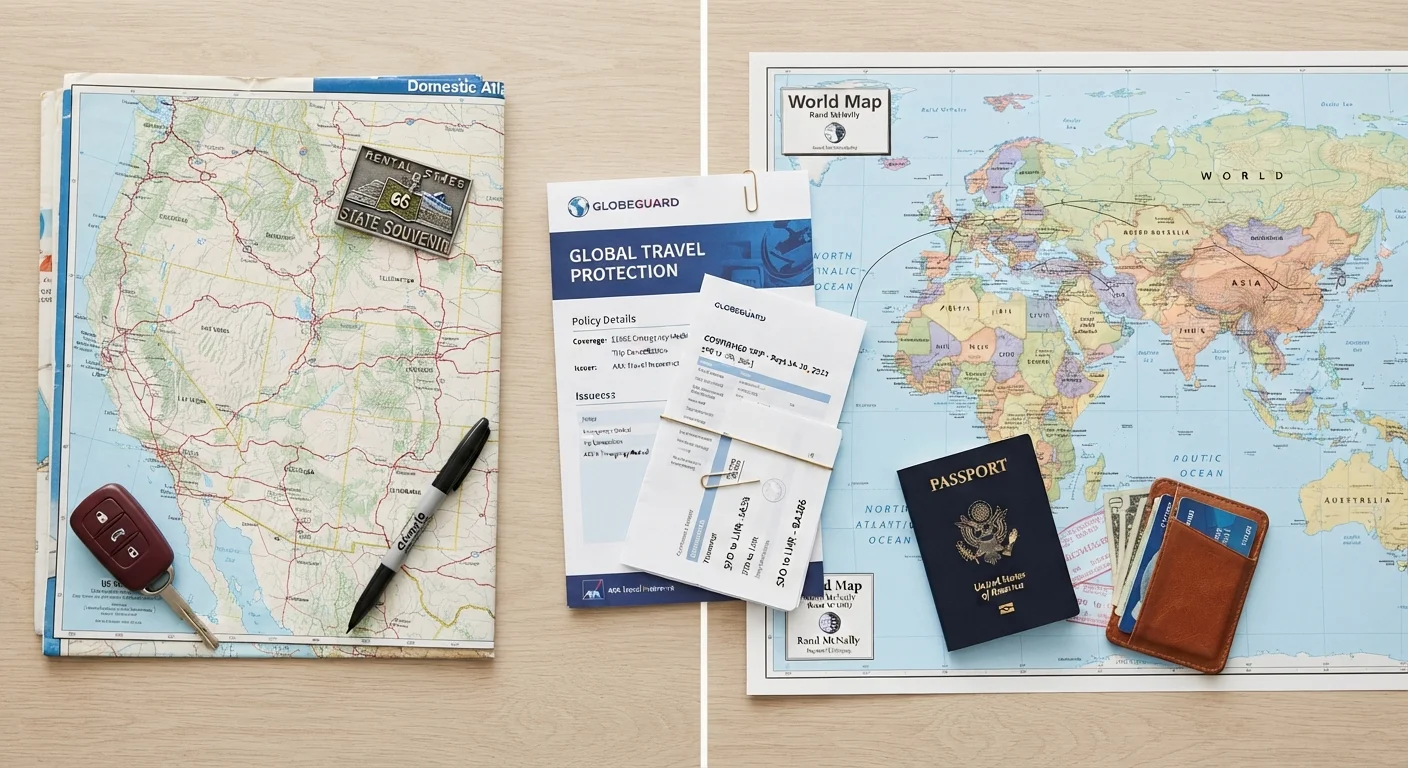
A trip cancellation policy becomes more financially meaningful when a large prepaid sum is at stake. The differences between domestic and international travel insurance matter here, since most all-inclusive destinations are outside the US. Medical evacuation coverage is worth reviewing specifically, as resort areas in some countries have limited local hospital infrastructure.
If you book all-inclusive trips more than once a year, it is worth comparing single-trip versus annual travel insurance to understand which structure fits your travel pattern.
How to evaluate whether it fits your trip
A few concrete questions help clarify the decision. First, would you actually use the included food and drinks enough to justify the bundled price? Travelers who eat lightly, prefer local food, or do not drink alcohol often pay for inclusions they do not use. Second, how much of the trip do you want to spend on-property versus exploring? Third, what is the cancellation and refund policy if plans change?
Compare the all-inclusive nightly rate against the cost of a room-only stay at a comparable hotel plus a realistic food and activity budget. That math does not always favor the bundle. Quiet budget drains sometimes include assuming that paying once means paying less.
This article is for general informational purposes only. Travel prices, inclusions, and resort policies vary and can change. Verify details directly with the resort or a licensed travel agent before booking.