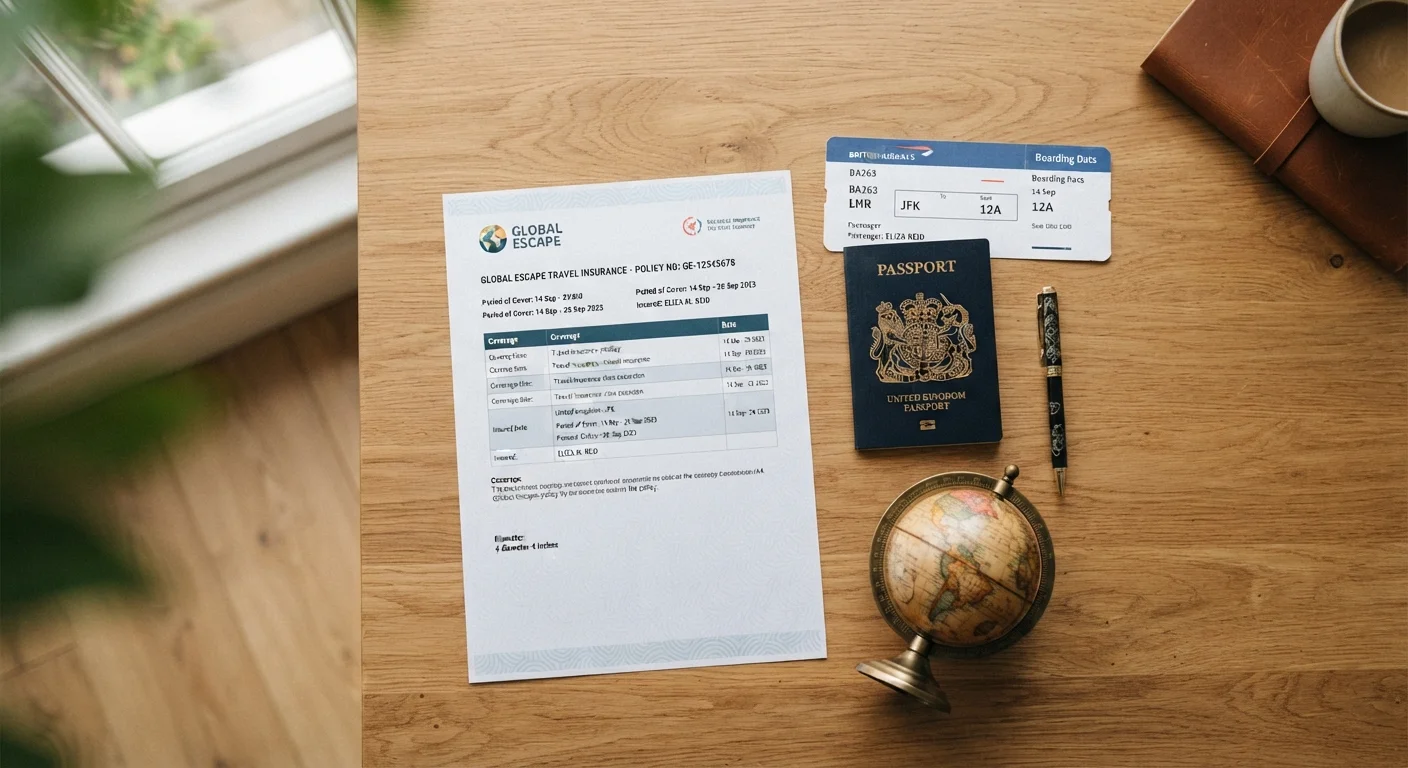

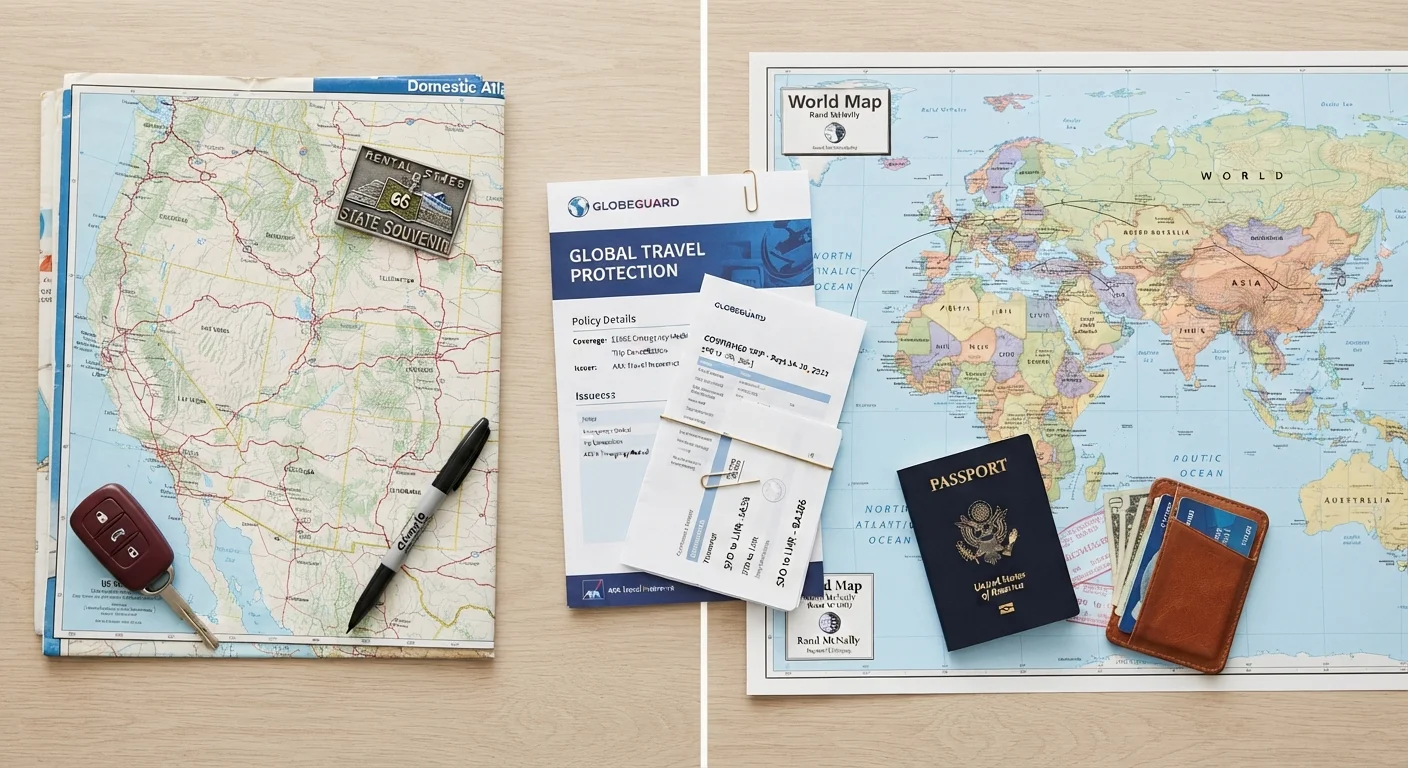
How the two policy types differ at a basic level
Domestic and international travel insurance policies share the same general framework: they reimburse losses tied to a covered trip. The differences come from the risks each type is built to address.
A domestic policy assumes your US health insurance is working in the background. Its benefits tend to focus on non-medical disruptions: trip cancellation, trip interruption, baggage delay or loss, and sometimes rental car damage. Medical coverage, if included, is often secondary, meaning it pays after your primary health plan does.
An international policy has to do more work. Outside the US, most American health plans pay nothing or very little. That gap puts emergency medical coverage and medical evacuation at the center of any international plan. Evacuation, which means transporting a sick or injured traveler to an appropriate hospital or back home, can cost $50,000 or more depending on the destination. International plans also cover trip cancellations and baggage loss, so those benefits overlap with domestic policies.
Key travel insurance terms worth knowing before comparing any policy include "primary vs. secondary coverage," "pre-existing condition waiver," and "cancel for any reason" riders, which affect both domestic and international plans differently.
Medical coverage: the most significant gap

Health insurance is the main reason the two policy types diverge in cost and scope. Within the US, most major health plans cover emergency care at in-network and out-of-network hospitals, though out-of-pocket costs vary. That existing coverage reduces the medical risk a domestic travel policy needs to address.
Abroad, the picture changes. Medicare, the federal program covering most Americans 65 and older, generally does not cover care outside the United States except in narrow circumstances. Private employer plans vary, but many exclude or severely limit foreign care. This means an international traveler who has a medical emergency may face the full cost of hospital treatment in a foreign country without any insurer paying first.
International travel insurance policies address this by including emergency medical benefits, typically ranging from $50,000 to $500,000 or more depending on the plan. They also cover emergency dental, physician visits, and prescription costs that arise during the trip. Domestic policies rarely carry these amounts because the underlying need is smaller.
Seniors planning trips abroad should pay particular attention to this gap. Senior travel planning basics covers this alongside other considerations specific to older American travelers.
Pre-existing condition waivers have deadlines
Most international travel insurance plans include a pre-existing condition waiver only if you buy the policy within a set window after your first trip deposit, commonly 14 to 21 days. This deadline varies by plan. If you have a chronic condition and wait to purchase, that condition may be excluded from medical coverage. Check the specific plan document for its waiver terms.
Trip cancellation, interruption, and baggage coverage
These three benefit categories appear in both domestic and international plans, but the dollar limits and covered reasons can differ.
Trip cancellation pays if you cannot take a trip before departure for a covered reason, such as a serious illness, a death in the family, or a natural disaster at the destination. Trip interruption pays if you have to cut a trip short after it begins. Both domestic and international policies typically reimburse prepaid, non-refundable expenses up to the policy limit.
International plans often set higher cancellation and interruption limits because international trips tend to cost more and involve more non-refundable bookings. A flight from New York to Tokyo is harder to recover money from than a domestic hotel reservation.
Baggage loss and delay benefits work similarly in both types. The difference is that international carriers operate under separate liability rules set by international treaties, which can affect how much an airline owes you before insurance steps in.
For a fuller picture of how these costs interact with overall trip spending, common trip budget mistakes outlines where travelers lose money without realizing it.
What to check before buying either type
Before purchasing any travel policy, review what you already have. Your existing health insurance, credit card benefits, and homeowners or renters insurance may already cover some losses. Buying duplicate coverage wastes money.
For domestic trips, confirm whether your health plan covers all US states without network restrictions. Some narrow-network plans create coverage gaps even within the country. If your health coverage is solid and your trip involves mostly refundable bookings, the case for a comprehensive domestic policy is weaker.
For international trips, check whether your health plan has any foreign emergency benefit at all. Call the member services number and ask specifically about coverage for emergency hospitalization outside the US. If the answer is no or very limited, that gap shapes what your international policy must include.
Also confirm whether the international plan you are considering covers pre-existing conditions. Many plans include a waiver if you purchase coverage within a set number of days of your initial trip deposit, typically 14 to 21 days, though this varies by plan. Missing that window can leave chronic health conditions excluded.
The pre-trip planning checklist includes insurance verification as one of several steps worth completing before any trip, domestic or international.
This article is for general informational purposes only and is not insurance, financial, or legal advice. Policy terms, coverage limits, exclusions, and pricing vary by provider and individual circumstances. Read the full policy document and consult a licensed insurance professional before purchasing coverage.