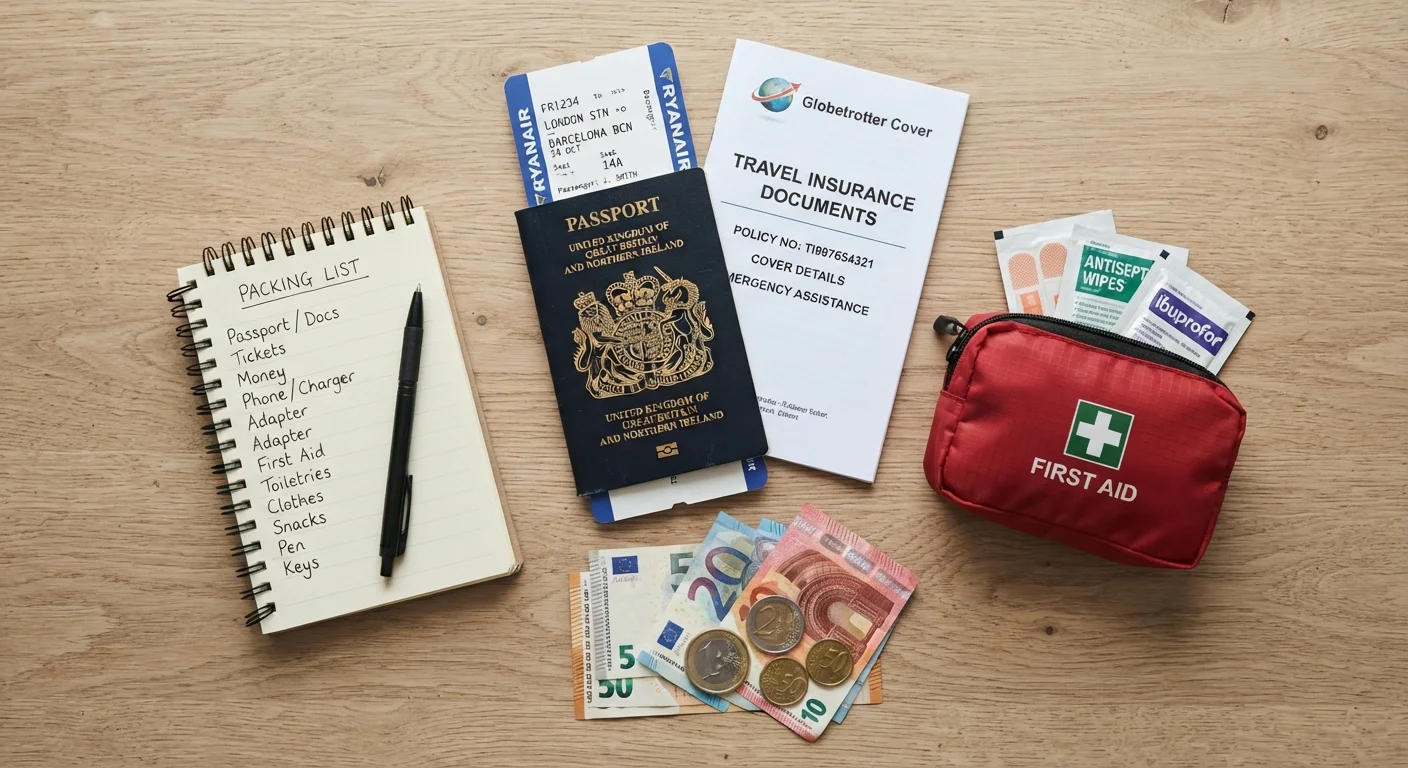
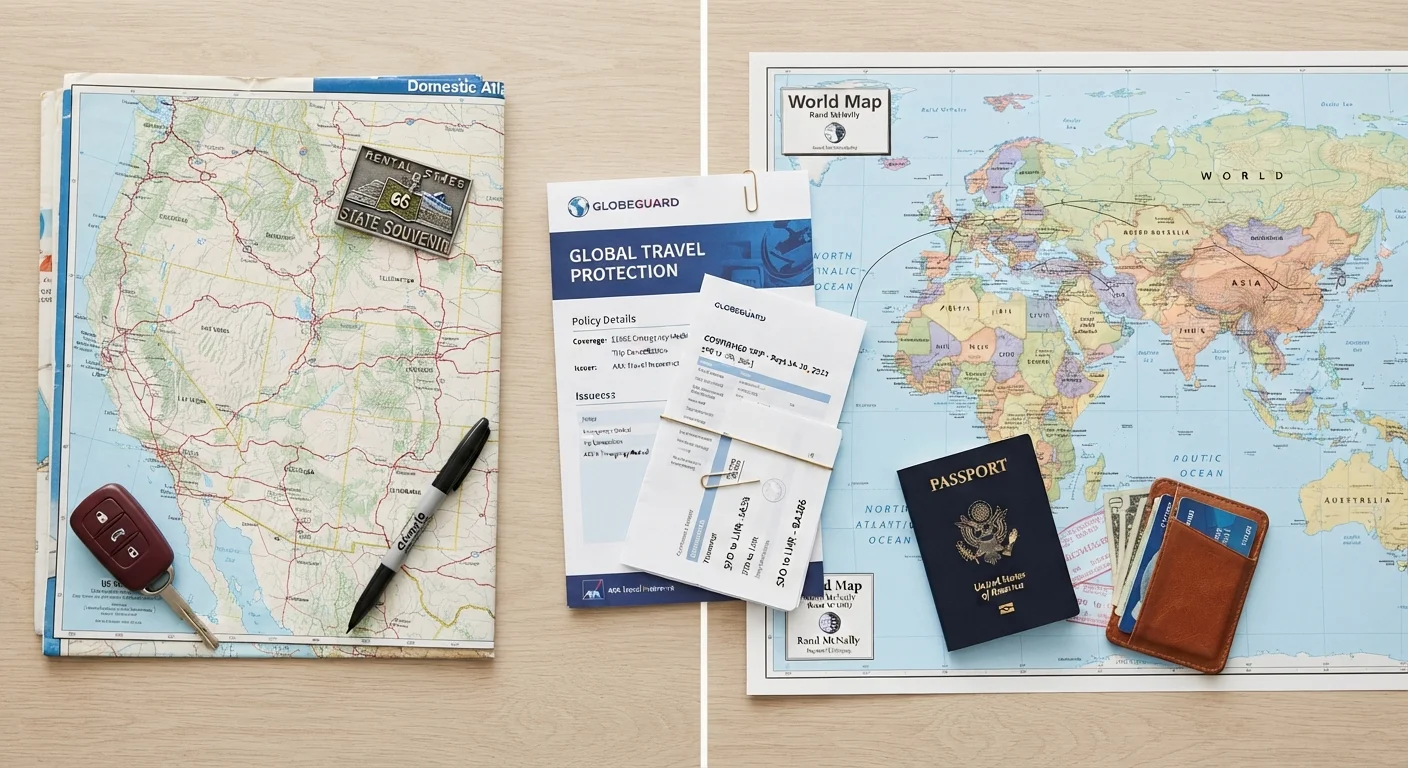
A practical checklist covering documents, health prep, insurance, finances, and packing essentials to review before any domestic or international trip.
Key Takeaways
Passport and visa requirements can take weeks to resolve, so verify them well before departure.
Your existing health insurance may not cover care abroad; check before assuming it does.
Travel insurance terms vary widely, so read what is and is not covered before purchasing.
Foreign transaction fees and card acceptance vary by destination and card issuer.
Packing light and strategically reduces checked baggage fees on domestic and international routes.
Why a pre-trip checklist matters
Most travel problems that derail budgets or cause real stress trace back to gaps in preparation: an expired passport, a credit card declined abroad, or a medical expense not covered by insurance. This checklist gives you a concrete way to audit your readiness before any domestic or international trip. Work through it at least two weeks before departure so you have time to act on anything you find.
Setting aside time to review documents and plans at least two weeks before departure reduces last-minute problems.
Older travelers and those with health considerations may want additional lead time. The practical guide for senior travel planning covers insurance, accessibility, and health preparation in more detail.
Your pre-trip checklist
Documents and identity
Check your passport expiration date. Many countries require at least six months of validity beyond your travel dates, so verify this rule for your specific destination with official government sources.Must
Confirm visa requirements for every country you will enter, including transit stops. Apply early, as processing times vary.Must
Make paper and digital copies of your passport, travel insurance policy, and any reservations. Store copies separately from the originals.Must
If traveling domestically by air, confirm your ID meets REAL ID requirements for TSA checkpoints.Must
Health and medical
Check whether your current health insurance covers care at your destination. Many domestic plans do not cover international care, and Medicare generally does not apply outside the United States.Must
Contact your doctor at least four to six weeks before international travel to discuss destination-specific vaccinations or health precautions. Verify requirements with official health authority sources.Must
Pack a sufficient supply of any prescription medications, along with copies of the prescriptions in their original bottles.Must
Research the location of medical facilities near your accommodations, especially for remote or rural destinations.Should
Travel insurance
Purchase travel insurance before your departure date, as most policies do not cover events that begin before the policy is active.Must
Read the coverage summary to confirm what is included for trip cancellation, medical expenses, and emergency evacuation.Must
Note any exclusions related to pre-existing conditions and understand the claims process before you need to use it.Should
Finances and payments
Notify your bank and credit card issuers of your travel dates and destinations to prevent fraud blocks on your account.Must
Confirm whether your cards charge foreign transaction fees and identify which cards are widely accepted at your destination.Should
Carry a small amount of local currency for destinations where card payments are not reliable, such as rural areas or small vendors.Should
Set a daily spending estimate for meals, transport, and activities to track costs against your budget during the trip.Should
Packing and logistics
Check airline baggage policies, including size and weight limits, before you pack to avoid fees at the airport.Must
Confirm accommodation check-in times and keep reservation confirmation numbers accessible offline.Must
Pack a charger, any needed adapters for your destination's outlets, and a portable battery if you rely on a phone for navigation or boarding passes.Should
Leave a copy of your itinerary with a trusted contact at home who can reach you or assist if needed.Nice to have
Budgeting mistakes are easy to make before a trip even starts. The article on common ways travelers undermine their own trip budgets covers foreign transaction fees, unnecessary upgrades, and other quiet drains worth knowing about.
Visa and passport problems cannot be solved at the airport
Entry denials due to passport validity or missing visas are among the most disruptive and costly travel problems. They are also almost entirely preventable. Verify requirements for every country on your itinerary, including layover stops, through official government sources at least four to six weeks before departure.
Travel insurance: what to confirm before you go
Travel insurance is general-purpose protection, but the coverage details matter more than the purchase itself. A policy that excludes a pre-existing condition or caps medical evacuation at a low amount may leave a gap exactly when you need coverage most. Review the policy summary page before your trip, not after a problem occurs.
Coverage rules differ significantly between domestic and international trips. The article on domestic vs. international travel insurance differences explains what to compare. If the terminology in any policy document is unclear, the travel insurance terms reference defines common language like "cancel for any reason," "primary vs. secondary medical coverage," and "trip interruption."
This article is for general informational purposes only and is not financial, insurance, or medical advice. Coverage terms, eligibility, and pricing vary by provider. Read your policy documents carefully and consult a licensed insurance agent for guidance specific to your situation.
Travel Editorial Team is the collective byline for our editorial team and contributor network. Articles published under this byline or an editorial pen name are researched, written, and reviewed according to our editorial standards for clarity, consistency, and independence before publication.
The content provided on our blog site traverses numerous categories, offering readers valuable and practical information. Readers can use the editorial team’s research and data to gain more insights into their topics of interest. However, they are requested not to treat the articles as conclusive. The website team cannot be held responsible for differences in data or inaccuracies found across other platforms. Please also note that the site might also miss out on various schemes and offers available that the readers may find more beneficial than the ones we cover.