
How the care spectrum works
Senior housing is not a single category. It spans a wide range of arrangements, from fully independent apartments to round-the-clock skilled nursing care. Understanding where different settings fall on that spectrum helps families have more productive conversations before a crisis forces a rushed decision.
The level of support a setting provides generally corresponds to how much help a person needs with activities of daily living (ADLs) such as bathing, dressing, and moving around safely. Medical complexity, cognitive status, and social needs also shape the right fit. Most people enter the spectrum at a lower-support level and move toward more intensive care over time, though some transitions happen suddenly after a hospitalization or fall.
| Housing types covered | 6 main categories |
| Who typically coordinates care needs assessment | Primary care physician or geriatric care manager |
| Federal program that may help with costs | Medicaid (eligibility varies by state) |
| Medicare coverage for long-term housing | Generally does not cover custodial long-term care (Medicare.gov) |
| Licensing requirement | Most residential care facilities require state licensure |
| Veterans housing assistance | VA Aid and Attendance benefit may offset costs for eligible veterans (U.S. Department of Veterans Affairs) |
Paying for senior housing is one of the more confusing parts of the process. Medicare generally does not cover long-term custodial care. Medicaid may cover certain residential settings, but eligibility rules vary considerably by state. See how Medicaid income and asset rules work for seniors for a grounded overview of what to expect.
The main housing types, explained
Independent living
Independent living communities, sometimes called retirement communities or senior apartments, are designed for older adults who do not need help with daily care. Residents typically live in private apartments or cottages on a shared campus. Amenities such as dining, transportation, and social programming are common, but medical or personal care services are not part of the standard arrangement. These communities are privately funded; neither Medicare nor Medicaid typically applies.
Assisted living
Assisted living facilities provide help with ADLs while allowing residents to maintain a degree of independence. Staff assist with tasks like medication management, bathing, and meals. Most assisted living is privately paid, though some states have Medicaid waiver programs that cover it. For a detailed comparison of assisted living with the next level of care, see assisted living vs. skilled nursing facilities.
Memory care
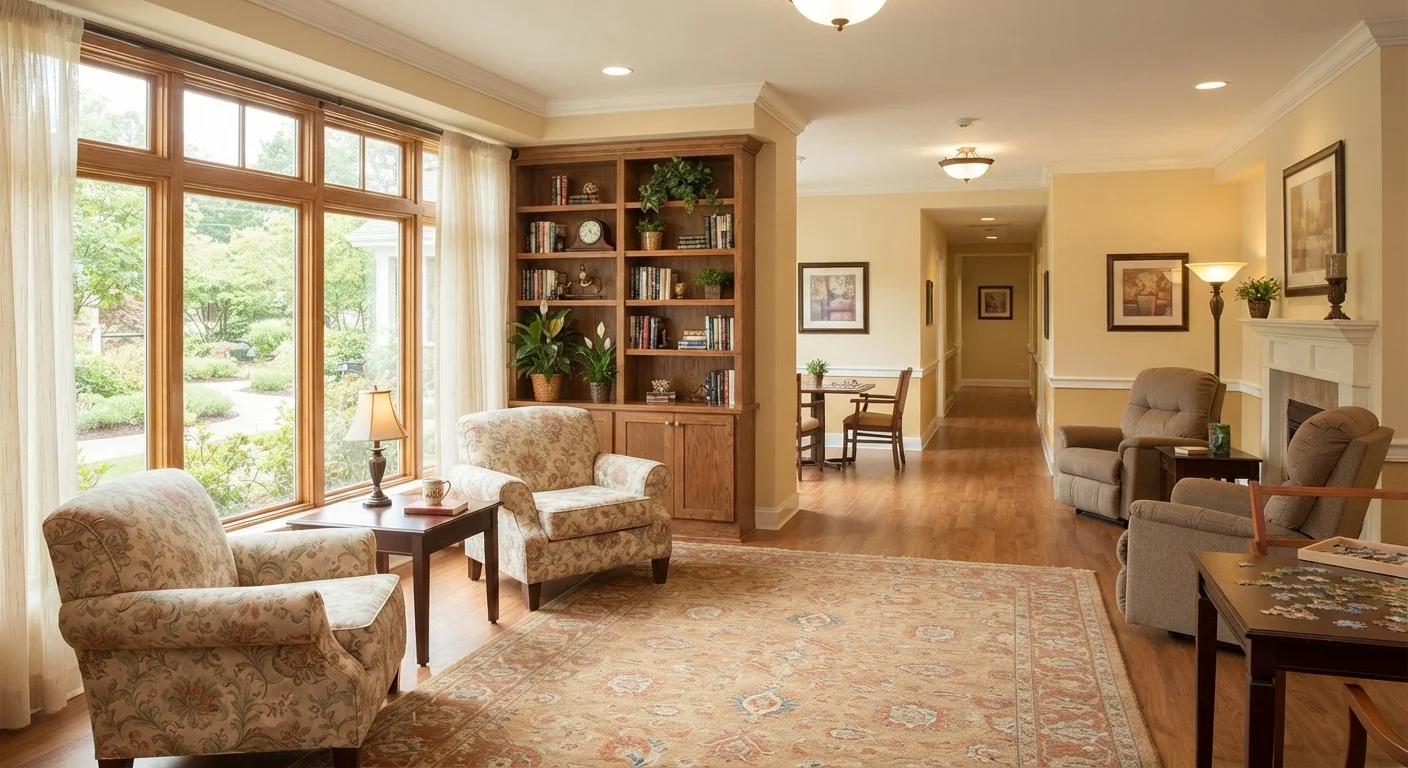
Memory care units are often located within assisted living or nursing facilities, though some operate as stand-alone communities. They are specifically designed for people living with Alzheimer's disease or other dementias. Physical layouts, staffing ratios, and daily programming differ from standard assisted living to account for cognitive impairment and safety needs.
Skilled nursing facilities
A skilled nursing facility (SNF) provides 24-hour care by licensed nurses and therapists. These settings serve people with complex medical needs or those recovering from surgery, stroke, or serious illness. Medicare covers short-term SNF stays under specific conditions following a qualifying hospital admission; long-term residence is generally paid out of pocket or through Medicaid.
Continuing care retirement communities
A continuing care retirement community (CCRC) combines independent living, assisted living, and skilled nursing care on one campus. Residents typically pay an entrance fee and ongoing monthly costs. Because these contracts can be financially complex, consulting an elder law attorney before signing is advisable.
Home- and community-based care
For adults who want to age in place, in-home care services range from companion visits to skilled nursing provided at home. Adult day programs offer structured daytime support outside the home. Medicaid home- and community-based services (HCBS) waivers fund some of these options in many states, though waitlists are common. Eligible veterans may also access home care benefits through the VA; veterans benefits for older Americans covers those programs in more detail.
What to consider when comparing options
Activities of daily living (ADLs)
Basic self-care tasks such as bathing, dressing, eating, toileting, and moving around. The number of ADLs a person needs help with is a common measure used to determine care level.
Custodial care
Non-medical assistance with ADLs and daily routines. Medicare generally does not cover custodial care; Medicaid may, depending on the state and setting.
Continuing care retirement community (CCRC)
A campus-style community that provides multiple levels of care, from independent living through skilled nursing, allowing residents to age in place as needs change.
Memory care
A specialized residential setting designed for people with Alzheimer's disease or other forms of dementia, with trained staff and a secure environment.
Skilled nursing facility (SNF)
A licensed facility providing round-the-clock medical and rehabilitative care by registered nurses and therapists. Medicare covers short-term SNF stays under specific conditions.
Aging in place
The ability to live in one's own home or a familiar setting as one ages, often supported by home modification or in-home care services.
Location relative to family, the facility's state inspection history, staff turnover rates, and the specifics of any contract all deserve attention. Costs vary widely by region and by the level of care provided. A geriatric care manager can assess care needs objectively and identify settings that match both medical requirements and personal preferences. Your loved one's primary care physician is also a practical starting point for a care-level assessment.
If health insurance coverage is part of the conversation, what changes with Medicare after 65 may be worth reviewing alongside housing options, since coverage type affects what medical services are accessible in different residential settings.
This article is for general informational purposes only and does not constitute medical, financial, or legal advice. Housing and care decisions should be made in consultation with qualified professionals who can evaluate your individual circumstances.