

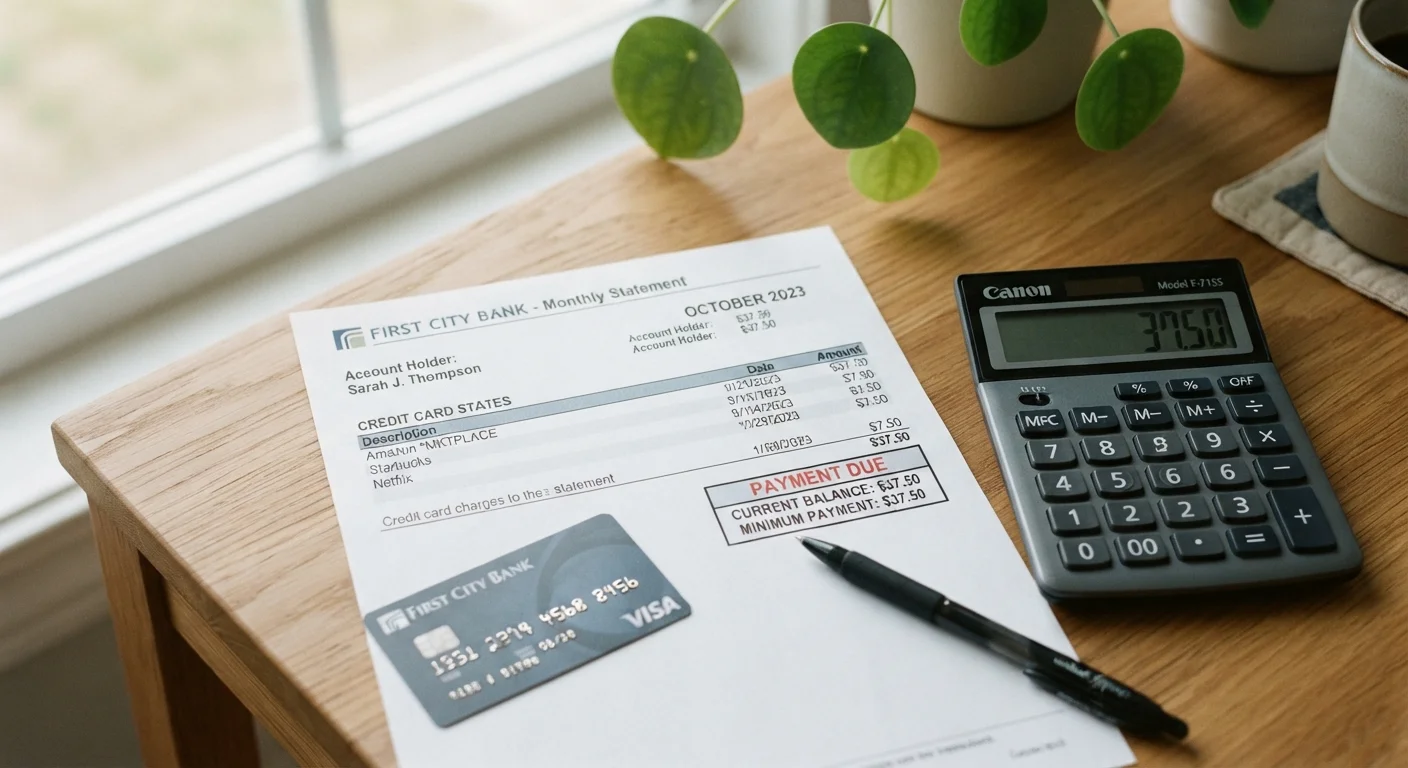
How minimum payments are calculated
Credit card issuers set minimum payments using one of two common methods. Some charge a flat dollar amount (often $25 or $35) or a percentage of the balance, whichever is greater. Others calculate the minimum as a percentage of the balance plus the month's interest and fees. Either way, the result is a figure designed to keep the account current, not to retire the debt quickly.
Because the minimum drops as the balance drops, payments shrink over time through a structure sometimes called a declining minimum. That means the repayment period stretches further even without new charges. A $3,000 balance at 22% APR paid with declining minimums can take well over a decade to pay off and generate total interest that rivals the original balance.
20%+
Average credit card APR in recent years
According to Federal Reserve consumer credit data, average credit card interest rates have exceeded 20% annually in recent reporting periods.
2% to 4%
Typical minimum payment as a percentage of balance
Most major card issuers set minimum payments at roughly 1% to 2% of the balance plus interest, often totaling 2% to 4% of the outstanding amount.
100%+
Extra interest paid on a long-term minimum-only balance
Consumer Financial Protection Bureau (CFPB) educational materials show that carrying a balance at a high APR with minimum-only payments can result in total interest exceeding the original principal.
Common mistakes that extend repayment
Most cardholders do not set out to stay in debt for years. The mistakes below are almost always the product of how credit card statements present information, not a lack of financial discipline.
Treating the minimum payment as the target payment rather than the floor.
Why it happens: Card statements display the minimum amount prominently, and paying it satisfies the account's requirements, so it feels like the right amount.
Ignoring how daily periodic rate interest compounds on the unpaid balance.
Why it happens: APR (annual percentage rate) sounds abstract. Many cardholders do not connect that figure to a daily charge applied to whatever balance remains after each payment.
Making extra purchases on a card while believing the minimum payment covers the growing balance.
Why it happens: A minimum payment that lowers the balance slightly creates a false sense of progress, especially when new charges offset or exceed what was paid.
Overlooking the credit utilization impact of a long-running high balance.
Why it happens: Borrowers focus on making on-time payments, which does help credit scores, but miss that a balance close to the credit limit suppresses scores through high utilization.
Assuming a balance transfer or new card solves the underlying payment habit.
Why it happens: A 0% promotional APR offer looks like a reset. Without changing the payment amount, the same minimum-payment pattern continues and the balance may still be high when the promotional period ends.
What actually changes the outcome
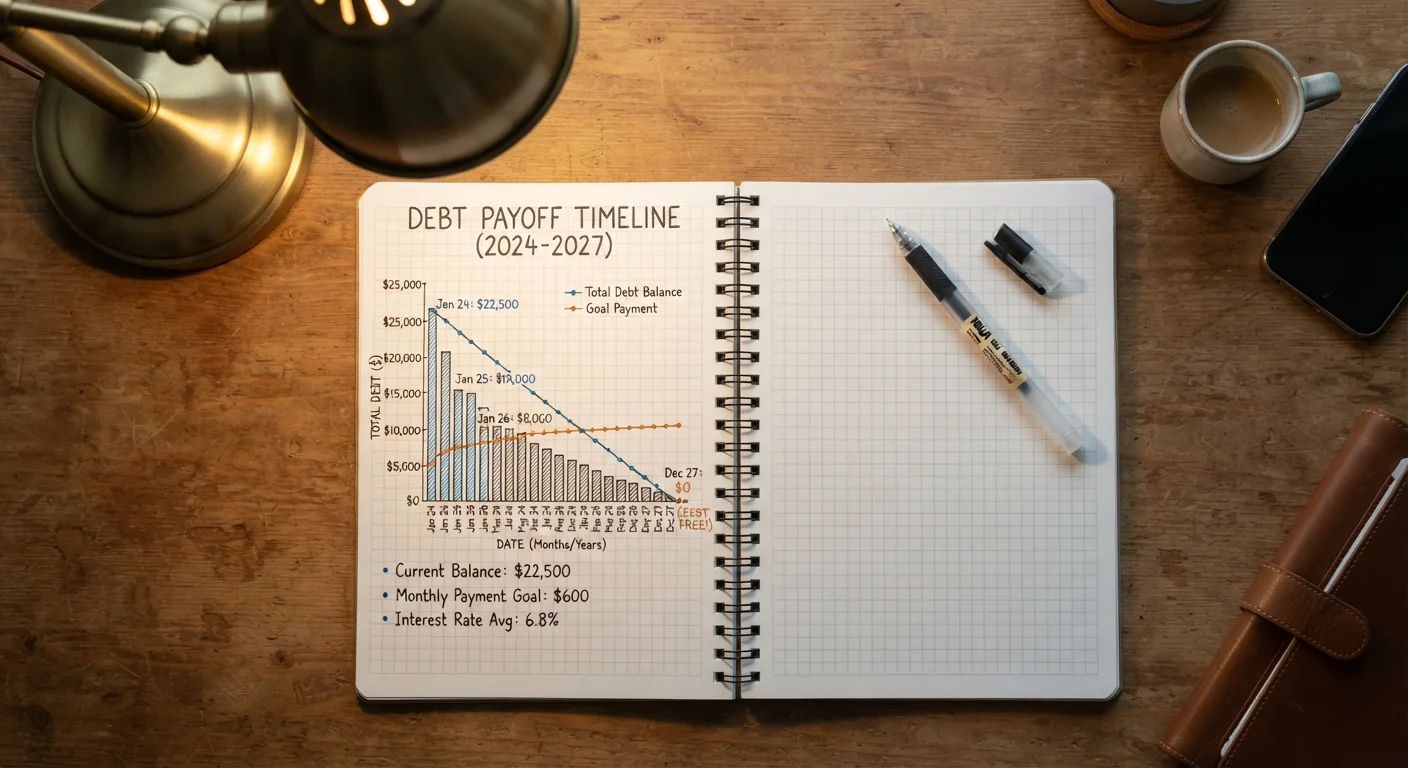
Paying a fixed dollar amount each month instead of a percentage-based minimum is one of the most direct ways to shorten repayment. Because a fixed payment does not shrink as the balance shrinks, a larger share of each payment goes toward principal as the balance falls.
For example, the minimum payment warning required on statements shows a "three-year payoff" amount. Paying that fixed amount consistently rather than the minimum can cut years off repayment and reduce total interest substantially, though results vary by balance, rate, and any new charges added.
The minimum payment warning on your statement matters
Federal law (the Credit CARD Act of 2009) requires issuers to include a minimum payment warning on every billing statement. It tells you how long it takes to pay off your current balance making only minimum payments, and how much a fixed monthly payment would need to be to pay it off in three years. Reading this box once a month costs nothing and provides a realistic picture of where your balance is headed.
Carrying debt on a credit card also has secondary financial effects. High balances relative to credit limits affect credit utilization, which affects credit scores, which in turn affects eligibility for lower rates on other borrowing. The financial picture extends beyond the card itself. Just as minimum auto coverage can leave gaps in protection, minimum credit card payments can leave a borrower exposed to compounding costs for far longer than expected.
Interest charges can exceed your original balance
On a balance carried at a high APR with only minimum payments, total interest paid over the life of the debt can exceed the amount originally borrowed. This is not a hypothetical: CFPB educational resources illustrate this outcome with common balance and rate scenarios. The principal shrinks slowly when most of each payment goes toward interest first. Paying even a modest fixed amount above the minimum accelerates how quickly the principal falls.
This article is for general informational purposes only and does not constitute personalized financial advice. Readers should consult a licensed financial professional for guidance specific to their own circumstances.